
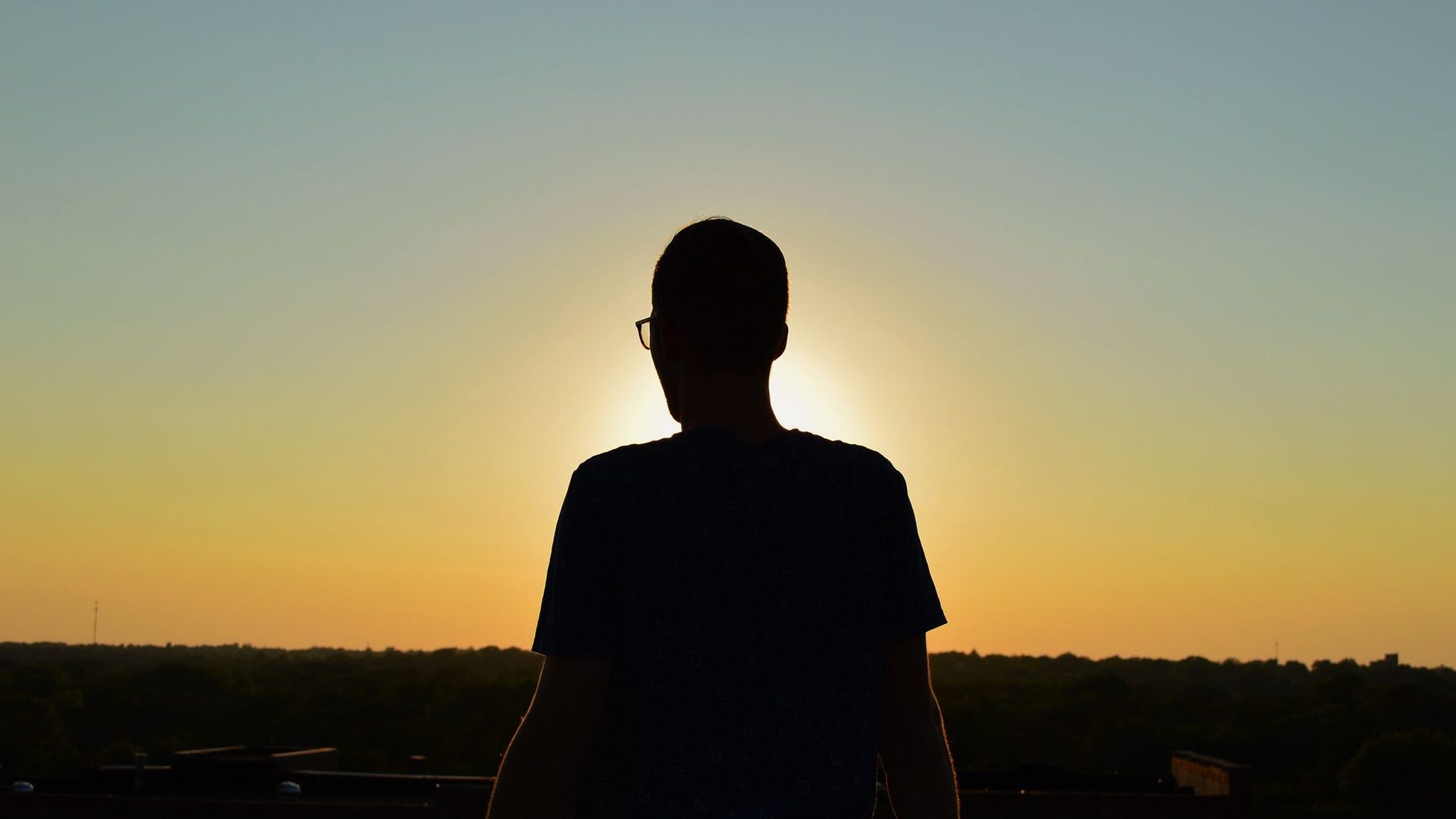
Morning light: How early light exposure sets your biological clock
Anyone who checks their screen first thing in the morning is missing out on a free, powerful biohacking tool: direct daylight. How early light exposure anchors your circadian rhythm — and why it does more than any sleep supplement.
Your inner clock and its most important signal
The suprachiasmatic nucleus (SCN) in the hypothalamus is the body's main biological clock. It coordinates sleep, waking, body temperature, cortisol, melatonin, and dozens of other circadian rhythms. The strongest external signal for this clock is light — specifically light received through the eyes.
The relevant light sensors are the intrinsically photosensitive retinal ganglion cells containing melanopsin. They respond especially strongly to short-wave blue light, which is abundant in the morning sky. When you see direct daylight in the morning, you send a clear signal to your biological clock: it's morning, the day is beginning — and you anchor the rhythm for the rest of the day.
What early light exposure actually does
Morning light triggers two important biological cascades: first, it supports the cortisol awakening response — a natural rise in cortisol in the first 30 to 45 minutes after waking, which establishes alertness and focus. Second, it sets the timer for when melatonin is released in the evening. People who see bright light in the morning tend to fall asleep earlier at night.
Studies show that people who are regularly exposed to daylight early in the morning report more stable sleep architecture, shorter time to fall asleep, and better daytime alertness. The effect is especially strong for evening types who want to shift their sleep schedule earlier.
How much light you need and when
The ideal window is within the first 30 to 60 minutes after waking. Direct daylight is significantly more effective than artificial light: on an overcast day, being outside still delivers 10,000 to 15,000 lux; a typical indoor space provides only 200 to 500 lux. Since light intensity is perceived logarithmically, this difference makes a substantial impact on the light signal.
5 to 10 minutes outdoors — without sunglasses — is enough on sunny days. On overcast days, 15 to 30 minutes. Sunscreen on your skin is fine; the point is light through the eyes, not UV exposure on the skin.
What happens when the morning rhythm is missing
People who don't get daylight exposure upon waking — for example by sleeping in during winter, reaching for a screen immediately, or working indoors — have a less stable clock. This shows up as sluggish waking, diffuse daytime sleepiness, and often delayed sleep onset. This state is called circadian misalignment.
Long-term circadian misalignment is associated with increased risks for metabolic conditions, mood disorders, and reduced immune protection — particularly with shift work, but also with less extreme patterns.
Morning light and the YUTHI app
Set up a morning routine in the YUTHI app and log when you first saw daylight. Link this with your sleep onset time, sleep quality, and morning energy — you'll likely notice a pattern within two weeks.
For a structured experiment: take a 10-minute walk every day immediately after waking for two weeks. The YUTHI app helps you stay consistent and observe the changes. No supplement is this affordable, this well-documented, and this hard to overdose.
That was the snapshot. The app turns it into daily support.
Measure every day instead of calculating once: Vito or Vita puts your numbers in context, builds you a weekly plan and speaks up when something stands out.
Launching at the end of 2026 — iPhone first, Android to follow. Let me know when it’s out ↓
Sources
- Wright KP et al. Entrainment of the human circadian clock to the natural light-dark cycle. Current Biology, 23(16):1554–1558, 2013.
- Lewy AJ et al. The circadian basis of winter depression. PNAS, 103(19):7414–7419, 2006.
- Zee PC, Manthena P. The brain's master circadian clock: implications and opportunities for therapy of sleep disorders. Sleep Medicine Reviews, 11(1):59–70, 2007.