
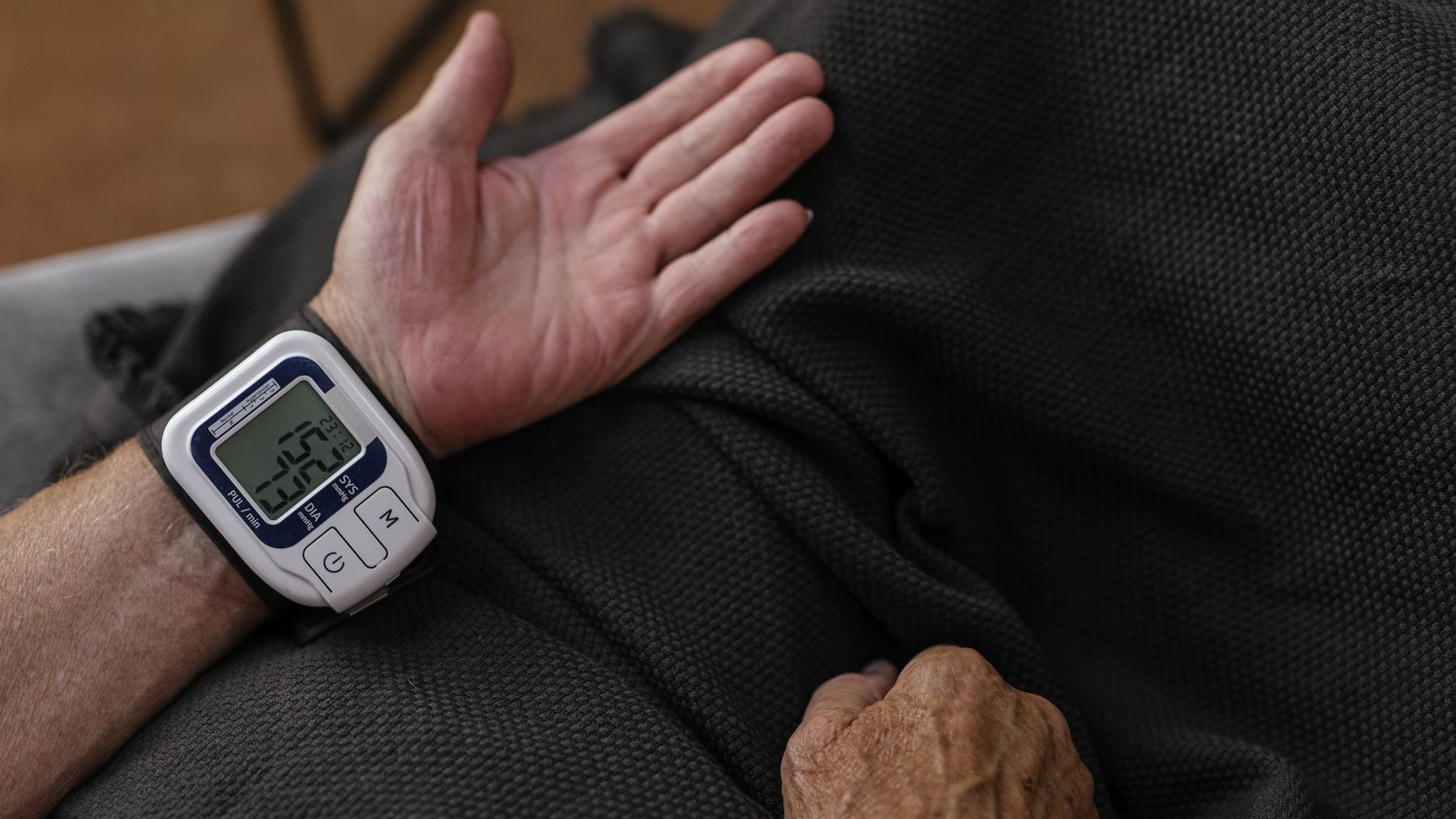
Measuring blood pressure correctly: Why a single reading at the doctor's often misleads
Blood pressure at the doctor's is often higher than at home — this is no coincidence, but the so-called white-coat effect. If you want to know your actual blood pressure, you need multiple readings under everyday conditions or an ambulatory 24-hour measurement.
Why a single blood pressure reading often gives an unreliable picture
Blood pressure is not a constant. It varies by 10 to 30 mmHg or more depending on body position, time of day, emotional state, last meal, and physical activity. A single reading at the doctor's does not capture any of this — it shows only a moment in an atypical environment.
The current guidelines of the European Society of Hypertension (ESH 2023) therefore explicitly recommend not basing blood pressure diagnoses on single measurements. Instead, measurements should be repeated, ideally outside the practice. What counts is the average blood pressure under real-life conditions.
White-coat effect and masked hypertension: Two extremes
The white-coat effect describes the rise in blood pressure at the doctor's due to the anxiety of the measurement situation. Blood pressure is elevated in the practice but normal at home. Approximately 15 to 30 percent of people with newly diagnosed hypertension have this form — it is called white-coat hypertension. The cardiovascular risk of this group lies between that of normotensive and truly hypertensive individuals.
The opposite is masked hypertension: blood pressure appears normal in the practice but is elevated at home or during physical exertion. This form is particularly dangerous from a cardiovascular standpoint because it goes undetected. It affects an estimated 10 to 15 percent of adults. Masked hypertension can only be identified by measuring outside the practice — with a home device or a 24-hour measurement.
Home measurement: How to do it correctly
For home measurement, cardiology societies recommend a validated device with an upper-arm cuff. Measurements should be taken in the morning after waking and in the evening before bed — twice each, one minute apart. Over seven days this produces a reliable average value that can be used for medical assessment.
Important preparation: sit quietly for five minutes, no caffeine or nicotine in the last 30 minutes, empty bladder, no talking during the measurement. Values of 135/85 mmHg or above in home monitoring are considered elevated — this threshold is slightly lower than for practice measurements (140/90 mmHg), because the home environment is more relaxed.
Ambulatory 24-hour blood pressure monitoring (ABPM)
With ambulatory 24-hour blood pressure monitoring (ABPM), you wear a small device for one day and night that measures automatically every 15 to 30 minutes. The result shows the complete blood pressure profile: everyday fluctuations, nocturnal blood pressure, and the morning surge after waking.
The nocturnal measurement is especially valuable. People whose blood pressure does not drop sufficiently at night (so-called non-dippers) carry an increased risk of heart disease and stroke — regardless of their daytime average. This finding can only be detected with ABPM. The measurement is an established tool in cardiological diagnostics and is used when white-coat hypertension is suspected or to monitor treatment.
When each measurement method makes sense
A home monitoring device is recommended for anyone who wants to track their blood pressure regularly in everyday life or wants to verify a hypertension diagnosis. It is affordable, available at any time, and delivers meaningful results when used consistently. ABPM is specifically useful when white-coat hypertension needs to be ruled out, antihypertensive therapy is being monitored, or there is a suspicion of nocturnal hypertension or a pronounced morning surge.
Reference values for classification: A daytime average below 130/80 mmHg in ABPM is considered favorable; nocturnal values should be at least 10 percent below daytime values. If your doctor only knows the practice measurement, it is worth discussing home monitoring — the added diagnostic value is well established.
Documenting blood pressure values and spotting trends with the YUTHI app
In the YUTHI app, you can log your morning and evening blood pressure values and track the trend over time. If you notice that your blood pressure has dropped after a period of more exercise or less salt, that is a concrete signal — and a good basis for your next conversation with your doctor.
That was the snapshot. The app turns it into daily support.
Measure every day instead of calculating once: Vito or Vita puts your numbers in context, builds you a weekly plan and speaks up when something stands out.
Launching at the end of 2026 — iPhone first, Android to follow. Let me know when it’s out ↓
Sources
- Mancia G et al. 2023 ESH Guidelines for the management of arterial hypertension. Journal of Hypertension, 2023;41(12):1874–2071.
- Pickering TG et al. Recommendations for blood pressure measurement in humans and experimental animals. Hypertension, 2005;45(1):142–161.
- Staessen JA et al. Predicting cardiovascular risk using conventional vs ambulatory blood pressure in older patients with systolic hypertension. JAMA, 1999;282(6):539–546.
- Williams B et al. 2018 ESC/ESH guidelines for the management of arterial hypertension. European Heart Journal, 2018;39(33):3021–3104.