
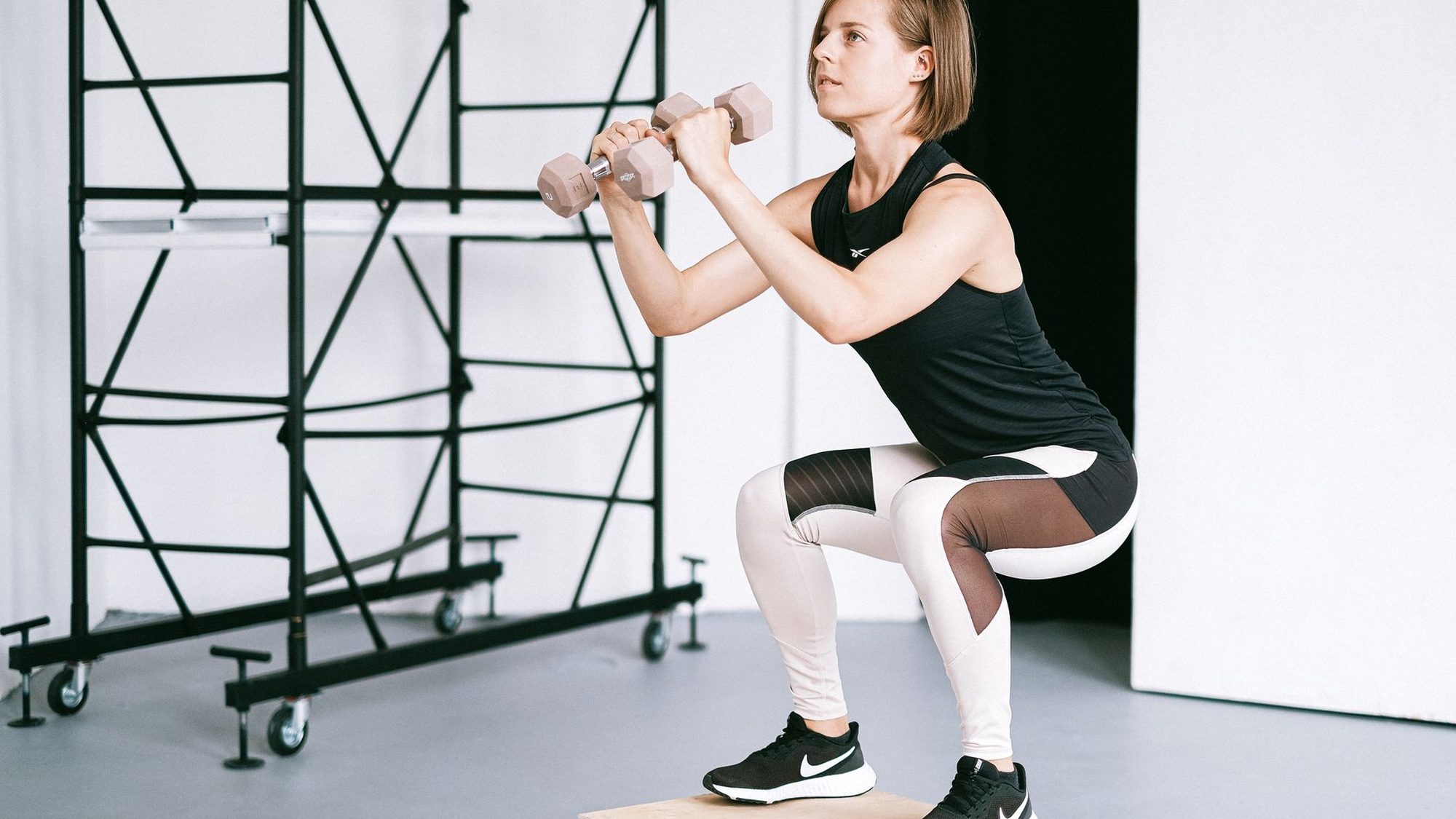
Strength and Bones: How Exercise Prevents Osteoporosis
Osteoporosis affects around 6 million people in the DACH region — and more than 80% of them are women. Bones are living tissue that responds to mechanical load. Which types of training preserve bone density most effectively, and when you should start.
Bones Are Not a Rigid Material
A common misconception: bones are a finished, unchangeable framework. In fact, they are living tissue with a continuous remodelling cycle. Osteoblasts build bone, osteoclasts break it down — a balance that depends on hormones, nutrition and, crucially, mechanical load.
When bone is regularly loaded — through body weight, muscle pull or impact forces — it responds by becoming denser. When it is not loaded, it breaks down. Bedridden patients lose measurable bone density within a few weeks. Astronauts on the space station lose up to 1 to 2% of bone mass per month without gravity. This shows: bones need load to stay healthy.
Which Sports Strengthen Bones Most Effectively
Not all sports have the same effect on bone density. Most effective are activities with impact loading and high muscle force. Running, jumping, skipping rope and team sports with quick changes of direction generate short, intense load impulses that stimulate bone formation most strongly.
Strength training with free weights or machines also has well-documented effects, especially at the hip and spine — the sites where osteoporotic fractures occur most often. Swimming and cycling, on the other hand, show little bone-strengthening effect due to buoyancy and sitting posture respectively — they are excellent for the heart, but no substitute for impact sports or strength training when it comes to bone protection.
The Window of Youth — and What Is Still Possible Afterwards
The highest bone density — the so-called peak bone mass — is reached in the second and third decades of life. The higher this peak density, the greater the buffer against later losses. Sport in childhood and adolescence is therefore an investment with lifelong returns.
This does not mean that exercise in adulthood comes too late. Studies show that strength training and impact sports can maintain or even slightly increase bone density even after menopause. The American College of Sports Medicine emphasises in its position statement: regular strength and impact training is the most effective non-pharmacological strategy for preventing bone loss.
Nutrition and Vitamin D: the Necessary Background
Training alone does not build bones if the raw materials are missing. Calcium and vitamin D are the essential building blocks and regulators of bone formation. Calcium: 1,000 to 1,200 mg daily is recommended, preferably through dairy products, green vegetables or mineral water. Vitamin D: without adequate levels — at least 30 ng/ml in the blood — calcium absorption is impaired.
Vitamin D deficiency is widespread, especially in winter and with little sunlight. A blood test gives clarity; supplementation is well-evidenced in cases of deficiency. Exercise plus adequate calcium plus adequate vitamin D — this combination has the strongest evidence base for maintaining bone health.
Tracking Bones and Activity in the YUTHI App
Bone density is not directly perceptible — a DEXA scan is the most reliable way to measure it. Once you know where you stand, you can take targeted action. For women from age 50 and men from age 60, a DEXA scan is a sensible baseline.
In the YUTHI app you can document your strength and impact training and track whether you are regularly doing the types of exercise that are proven to be effective for bones. Combined with data on vitamin D levels and calcium intake, this creates a complete picture of your bone strategy — not as a one-time check, but as an ongoing overview.
That was the snapshot. The app turns it into daily support.
Measure every day instead of calculating once: Vito or Vita puts your numbers in context, builds you a weekly plan and speaks up when something stands out.
Launching at the end of 2026 — iPhone first, Android to follow. Let me know when it’s out ↓
Sources
- Kohrt WM, Bloomfield SA, Little KD, Nelson ME, Yingling VR; American College of Sports Medicine. American College of Sports Medicine Position Stand: physical activity and bone health. Med Sci Sports Exerc. 2004;36(11):1985–1996.
- Guadalupe-Grau A, Fuentes T, Guerra B, Calbet JA. Exercise and bone mass in adults. Sports Med. 2009;39(6):439–468.
- Benedetti MG, Furlini G, Zati A, Letizia Mauro G. The effectiveness of physical exercise on bone density in osteoporotic patients. Biomed Res Int. 2018;2018:4840346.