
Staying full: what really controls hunger and satiety
Why are you hungry again two hours after lunch? And why does porridge keep you fuller than a croissant with the same number of calories? The answers lie in your body's hormonal regulation.
The hormones behind hunger and satiety
Hunger is not a failure of willpower — it is a complex hormonal signal. The most important hunger hormone is ghrelin, produced mainly in the stomach. It rises before meals and falls after eating. Ghrelin sends the hypothalamus in the brain the signal: eat now. People who sleep little or are under chronic stress demonstrably have elevated ghrelin levels — which explains why sleep deprivation and stress increase appetite.
Leptin is the counterweight: it is released from fat tissue and signals the brain fullness and adequate energy stores. In significant obesity, so-called leptin resistance can develop — the brain no longer responds normally to leptin signals even though the level is elevated. The satiety signal is ignored and hunger persists.
GLP-1: the satiety hormone from the gut
Glucagon-like Peptide 1 (GLP-1) is a hormone released from the small intestine after eating that both stimulates insulin secretion and slows gastric emptying while also enhancing the feeling of fullness in the brain. Certain foods — especially proteins, dietary fibre, and healthy fats — trigger GLP-1 release more strongly than highly processed, sugar-rich products.
GLP-1 agonists such as semaglutide (Ozempic, Wegovy) exploit this mechanism pharmacologically — which explains why these medications are so effective for weight reduction. What the drugs do at high doses, diet with natural GLP-1 triggers can at least partially replicate on a smaller scale.
What genuinely keeps you full
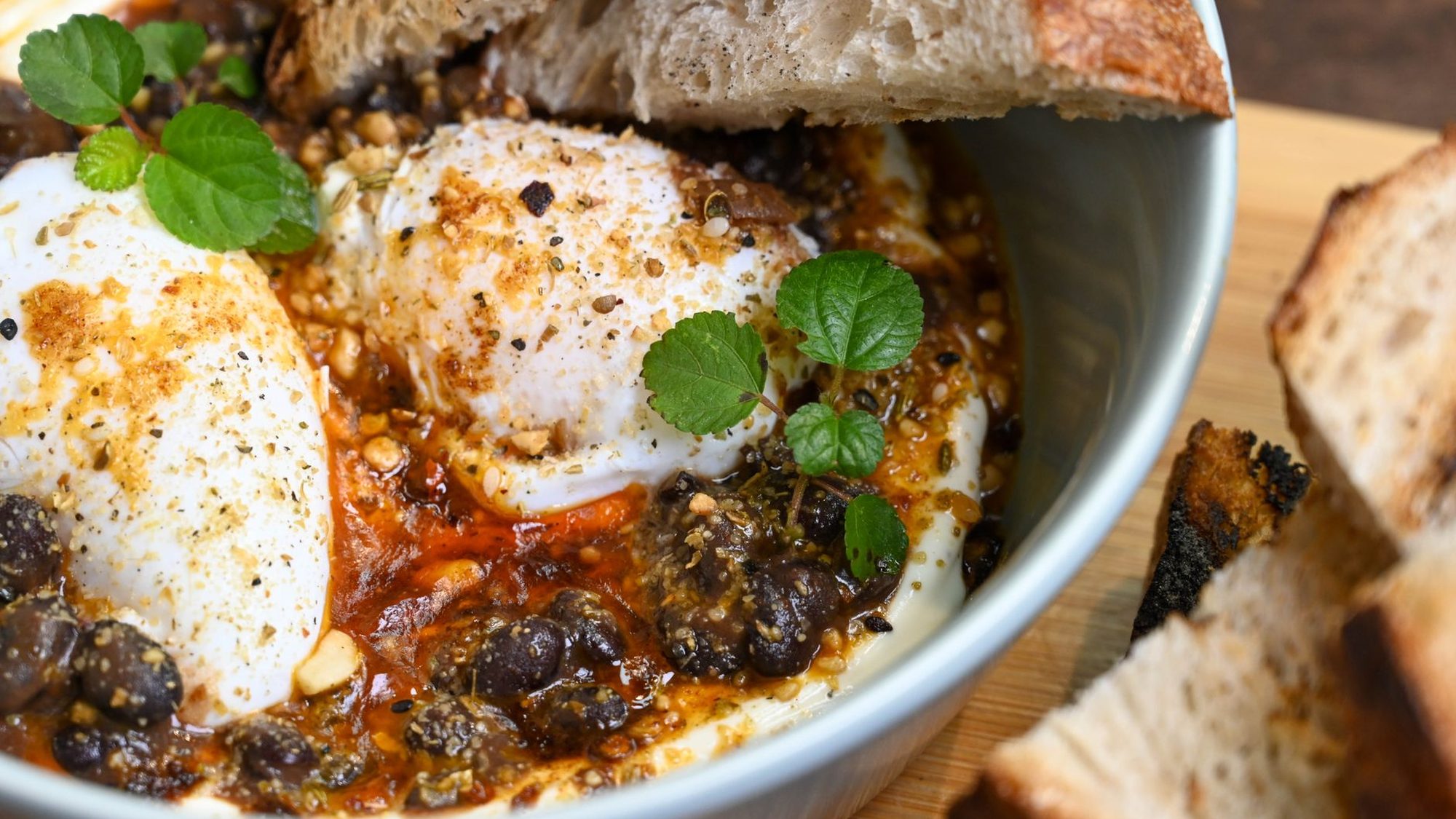
Protein is the most satiating macronutrient per calorie. It stimulates GLP-1 and PYY (another satiety hormone) more strongly than fat or carbohydrates. Studies show that a protein-rich meal measurably reduces calorie intake at the next meal. That is one reason why a breakfast with eggs or yoghurt suppresses hunger better than toast with jam.
Dietary fibre is the second lever: it swells in the stomach, slows gastric emptying, and is fermented in the gut into short-chain fatty acids, which also influence satiety. Legumes, oats, and vegetables combine high fibre content with moderate protein — a particularly filling combination. Fats from nuts and avocado additionally slow gastric emptying.
Why ultra-processed foods disrupt the satiety mechanism
Ultra-processed foods (UPF) are engineered to be pleasant to eat: an optimal combination of fat, sugar and salt, soft texture, high energy density with little satiety. Kevin Hall from the US National Institute of Health showed in a controlled study (2019): participants who were allowed to eat UPF ad libitum (to satiety) consumed around 500 kcal more per day than the group eating unprocessed foods.
The mechanism is complex, but texture plays a role: soft, easy-to-eat food requires less chewing, generates fewer jaw-muscle signals, and passes through the stomach more quickly. Raw, firm foods such as carrots, nuts, or legumes mechanically slow intake — and give the hormonal feedback loop time to signal satiety.
What you can actually try
Three strategies that perform best in research: First, start or combine every meal with a protein source (eggs, legumes, fish, yoghurt). Second, include fibre-rich foods in every meal — vegetables, legumes, wholegrains. Third, eat and chew slowly: the satiety signal takes 15 to 20 minutes to reach the brain. If you eat quickly, you are already overfull before your body says stop.
Water or unsweetened tea before and during a meal can briefly enhance the feeling of fullness. Soups and stews are more filling than the same ingredients served dry — because the volume stimulates gastric distension, which also sends satiety signals.
Observing satiety patterns with YUTHI
In the YUTHI app you can log when you eat and when you next feel hungry — and find out which meals keep you genuinely full for longer. This self-observation is more valuable than calorie tables, because it shows you exactly how your body responds to specific foods and combinations.
That was the snapshot. The app turns it into daily support.
Measure every day instead of calculating once: Vito or Vita puts your numbers in context, builds you a weekly plan and speaks up when something stands out.
Launching at the end of 2026 — iPhone first, Android to follow. Let me know when it’s out ↓
Sources
- Blundell J. et al. Appetite control: methodological aspects of the evaluation of foods. Obes Rev. 2010;11(3):251–270.
- Hall KD. et al. Ultra-processed diets cause excess calorie intake and weight gain: an inpatient randomized controlled trial of ad libitum food intake. Cell Metab. 2019;30(1):67–77.
- Leidy HJ. et al. The role of protein in weight loss and maintenance. Am J Clin Nutr. 2015;101(6):1320S–1329S.
- Degen L. et al. Effect of peptide YY3-36 on food intake in humans. Gastroenterology. 2005;129(5):1430–1436.