
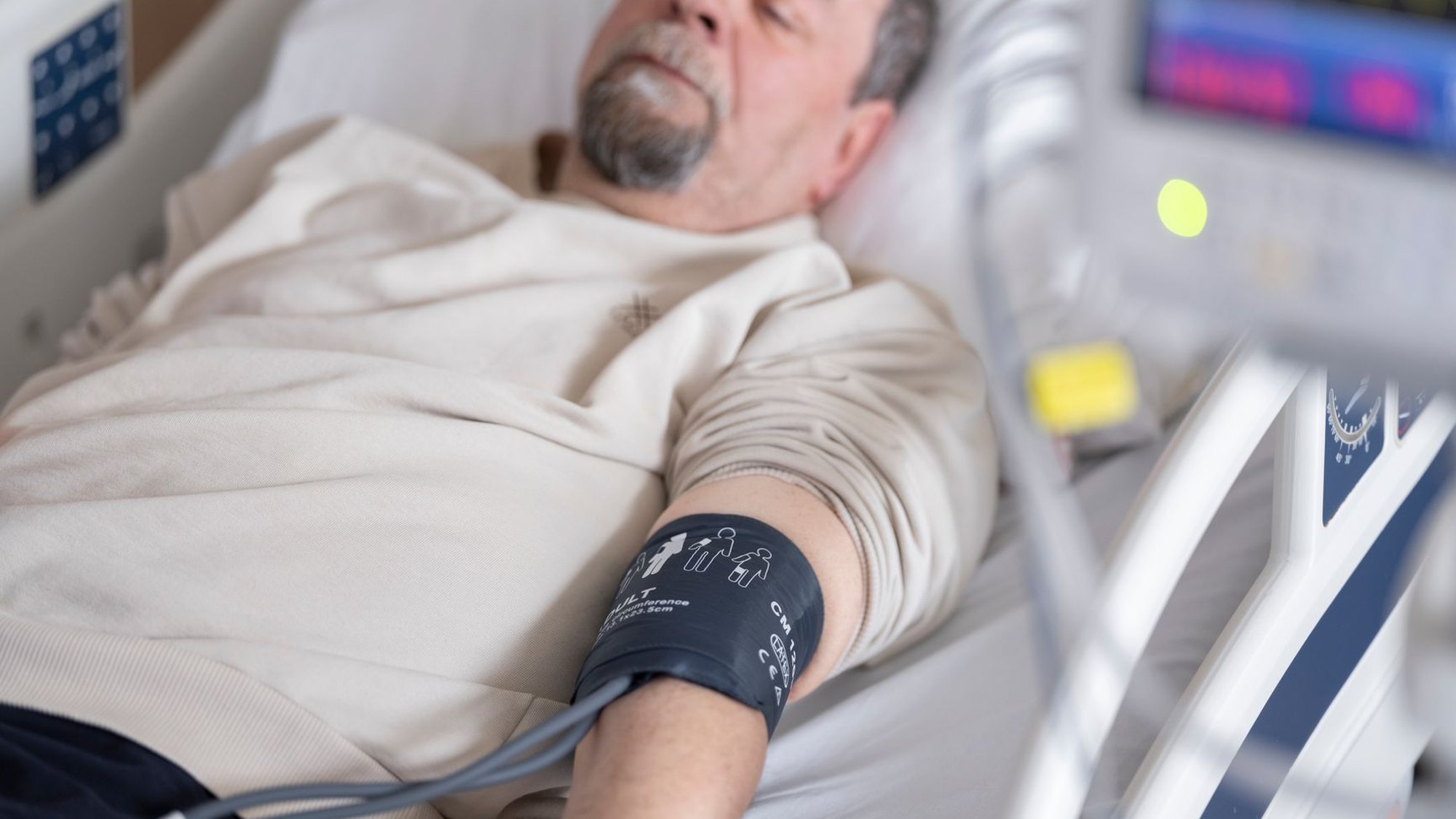
Sleep lab: when a visit to a sleep specialist makes sense
Most sleep problems can be significantly improved through better sleep hygiene and CBT-I. But sometimes there's something behind them that needs medical evaluation. This article explains which symptoms justify a sleep lab appointment – and what happens there.
When even good sleep isn't enough
Most sleep problems – difficulty falling asleep, occasional waking, poor sleep quality – can be addressed through conservative measures: sleep hygiene, regular schedules, stress management and CBT-I if needed. These problems don't require a sleep lab.
However, there are symptoms that point to sleep-related disorders that can only be reliably diagnosed through clinical measurement. The sleep lab – or ambulatory polygraphy as a first step – delivers objective data that self-observation and sleep trackers cannot replace.
Symptoms worth investigating
The following complaints justify a conversation with a sleep specialist: regular snoring with observed breathing pauses; waking with a racing heart or a feeling of suffocation; marked daytime sleepiness despite adequate sleep duration (especially if you fall asleep sitting or struggle while driving); morning headaches; strong restlessness or tingling in the legs in the evening (suggesting restless legs syndrome); nocturnal jerks or movements (periodic limb movement disorder); sleepwalking or sleep paralysis in adults.
Kapur et al. (J Clin Sleep Med, 2017) described in the clinical guideline for diagnosing obstructive sleep apnoea which symptom combinations justify further evaluation. The core screening for sleep apnoea covers snoring, daytime sleepiness and observed breathing pauses – if two of these three factors are present, evaluation is recommended.
Ambulatory polygraphy vs. polysomnography
For evaluating suspected sleep apnoea, ambulatory polygraphy is often sufficient. You wear a small device overnight at home that measures airflow, oxygen saturation, heart rate, snoring sounds and body position. It is less involved than a sleep lab stay and sufficient for many diagnostic questions.
Polysomnography (PSG) in the sleep lab is the more comprehensive method. In addition to breathing parameters, it simultaneously measures EEG (brain waves), EMG (muscle activity), EOG (eye movements) and other parameters. It is the gold standard for complex questions: narcolepsy, periodic limb movements, REM sleep behaviour disorders or unexplained daytime sleepiness with a negative polygraphy result.
Which diagnoses are made in the sleep lab
The most common diagnosis is obstructive sleep apnoea (OSA), whose severity is indicated by the apnoea-hypopnoea index (AHI) – the number of breathing pauses and reductions per hour. Mild: 5–15, moderate: 15–30, severe: above 30. Treatment depends on severity, symptoms and individual preferences – from conservative measures to CPAP to surgical options.
Further diagnoses that can be confirmed or ruled out in the sleep lab: narcolepsy (evaluated via MSLT – Multiple Sleep Latency Test), central sleep apnoea (different mechanisms from OSA), periodic limb movement disorder (PLMD), parasomnias such as sleepwalking or REM sleep behaviour disorder (RBD – a possible early marker for Parkinson's disease).
What you can do before your sleep lab appointment
Before making an appointment, keeping a sleep diary for two to four weeks is helpful. It documents sleep times, wake times, sleep quality, snoring (if you're aware of it) and daytime sleepiness – and gives the sleep specialist a solid data foundation for the initial consultation.
If you have a sleep tracker, you can bring along the data. It doesn't replace lab diagnostics, but it provides useful pointers to patterns and supports the consultation. The goal is not to arrive at the doctor's with a self-diagnosis, but with well-documented symptoms.
How the YUTHI app helps you
If you're wondering whether your sleep problems warrant a sleep medicine evaluation, you can document symptoms and sleep quality over several weeks in the YUTHI app. The collected data forms the basis for an informed conversation with your doctor – and helps you identify patterns that remain invisible in everyday life. The app doesn't replace diagnostics, but prepares you well for it.
That was the snapshot. The app turns it into daily support.
Measure every day instead of calculating once: Vito or Vita puts your numbers in context, builds you a weekly plan and speaks up when something stands out.
Launching at the end of 2026 — iPhone first, Android to follow. Let me know when it’s out ↓
Sources
- Kapur VK, Auckley DH, Chowdhuri S, et al. Clinical Practice Guideline for Diagnostic Testing for Adult Obstructive Sleep Apnea: An American Academy of Sleep Medicine Clinical Practice Guideline. J Clin Sleep Med. 2017;13(3):479–504.
- American Academy of Sleep Medicine. International Classification of Sleep Disorders, 3rd Edition (ICSD-3). American Academy of Sleep Medicine; 2014.
- Peppard PE, Young T, Barnet JH, Palta M, Hagen EW, Hla KM. Increased prevalence of sleep-disordered breathing in adults. Am J Epidemiol. 2013;177(9):1006–1014.