
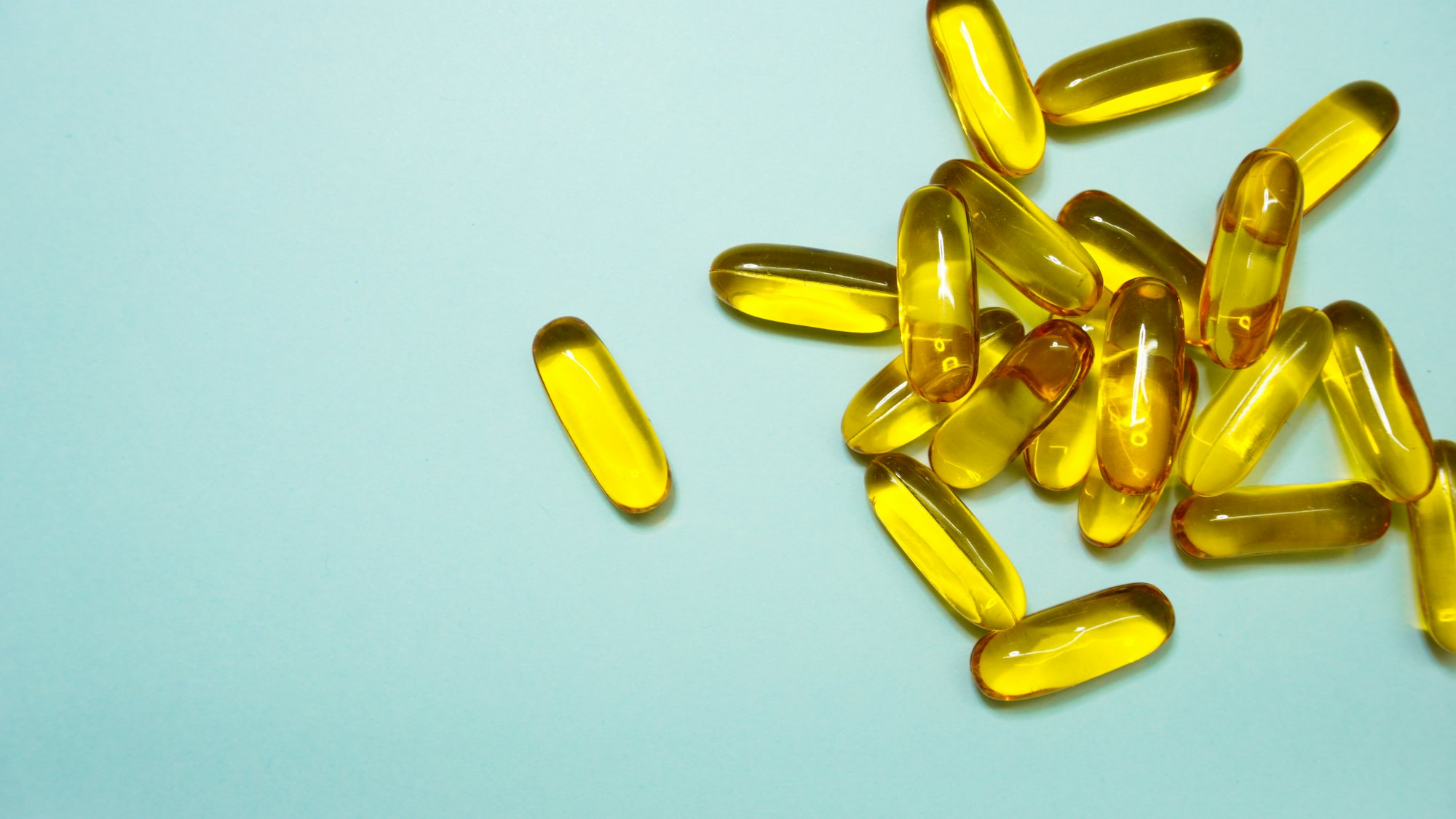
Omega-3 & heart health: what the studies really show
Fish oil capsules have long been considered a classic for heart protection – but the evidence is more nuanced than their reputation suggests. What omega-3 fatty acids do for your heart, who benefits most and when supplementation really makes sense.
What omega-3 fatty acids actually are
Omega-3 fatty acids are polyunsaturated fats that the body cannot produce on its own – it depends on dietary intake. For heart health, two marine forms are particularly important: EPA (eicosapentaenoic acid) and DHA (docosahexaenoic acid), found mainly in fatty fish such as salmon, mackerel and sardines.
There is also ALA (alpha-linolenic acid) from plant sources such as flaxseed or walnuts. The catch: the body converts ALA into EPA and DHA only to a very limited extent. Anyone aiming for heart-relevant effects will hardly be able to avoid marine omega-3 sources or high-quality algae oil.
What the major heart studies show
The most impactful study to date is REDUCE-IT: over 8,000 high-risk patients with elevated triglycerides took 4 grams of highly purified EPA (icosapent ethyl) daily. The result: serious cardiovascular events fell by 25 per cent – an unusually strong effect (Bhatt et al., N Engl J Med, 2019).
Earlier, the GISSI-Prevenzione study showed: in heart attack patients, 1 gram of EPA+DHA per day significantly reduced cardiovascular mortality (Marchioli et al., Lancet, 1999). More recent Cochrane reviews using typical supplement doses show less clear-cut benefits for the general population (Abdelhamid et al., Cochrane, 2018). The evidence is therefore nuanced – and the benefit depends strongly on who is taking omega-3 and at what dose.
Triglycerides and inflammation – the measurable effects
What is consistently documented across studies: EPA and DHA lower elevated blood triglyceride levels – a recognised risk factor for cardiovascular disease. The American Heart Association summarised this effect in a scientific statement based on numerous studies (Skulas-Ray et al., Circulation, 2019).
Additionally, EPA has anti-inflammatory properties. Since chronic low-grade inflammation is considered a driving force behind atherosclerosis, this mechanism is seen as an important explanation for the observed cardioprotective effects in high-risk patients.
Fish or capsule – which is better?
Cardiology guidelines and nutrition societies agree: two portions of fatty fish per week are the best foundation. Fish provides EPA and DHA along with additional beneficial nutrients that are absent in isolated capsule form (ESC Guidelines on Prevention, 2021).
Those who eat little fish, follow a plant-based diet or have elevated triglycerides can supplement with high-quality capsules. Quality matters when choosing: fish oil oxidises easily and turns rancid – an unpleasant aftertaste is a warning sign. Algae oil supplies EPA and DHA on a plant basis and is the sensible alternative for vegans.
For whom omega-3 is especially relevant
The strongest effects are seen in people with elevated triglycerides, following a heart attack, or with an existing high cardiovascular risk. For them, targeted supplementation – ideally in consultation with a doctor – may be worthwhile.
For healthy people with no identifiable cardiovascular risk, the evidence for capsules is less clear. Here, regular consumption of fatty fish is the priority – simple, nutrient-rich and well supported by evidence.
Dosage and safety
For general heart health, 1 to 2 grams of EPA+DHA daily is commonly cited. The high doses from the REDUCE-IT study (4 grams of pure EPA) are prescription-only and designed for high-risk patients under medical supervision.
Omega-3 supplements are generally well tolerated. At very high doses or when taken alongside blood-thinning medications, medical advice should be sought. This content is general, evidence-based information and does not replace medical advice.
That was the snapshot. The app turns it into daily support.
Measure every day instead of calculating once: Vito or Vita puts your numbers in context, builds you a weekly plan and speaks up when something stands out.
Launching at the end of 2026 — iPhone first, Android to follow. Let me know when it’s out ↓
Sources
- Bhatt DL et al. Cardiovascular Risk Reduction with Icosapent Ethyl for Hypertriglyceridemia (REDUCE-IT). N Engl J Med, 2019.
- Marchioli R et al. (GISSI-Prevenzione) Dietary supplementation with n-3 polyunsaturated fatty acids and vitamin E after myocardial infarction. Lancet, 1999.
- Abdelhamid AS et al. Omega-3 fatty acids for the primary and secondary prevention of cardiovascular disease. Cochrane Database Syst Rev, 2018.
- Skulas-Ray AC et al. Omega-3 Fatty Acids for the Management of Hypertriglyceridemia (AHA Scientific Statement). Circulation, 2019.