
Mediterranean Diet: What the Long-Term Studies Really Show
The Mediterranean diet is considered one of the most thoroughly researched eating patterns of all. What's really behind it — and why did two of the most significant nutrition studies examine exactly this pattern?
What defines the Mediterranean diet
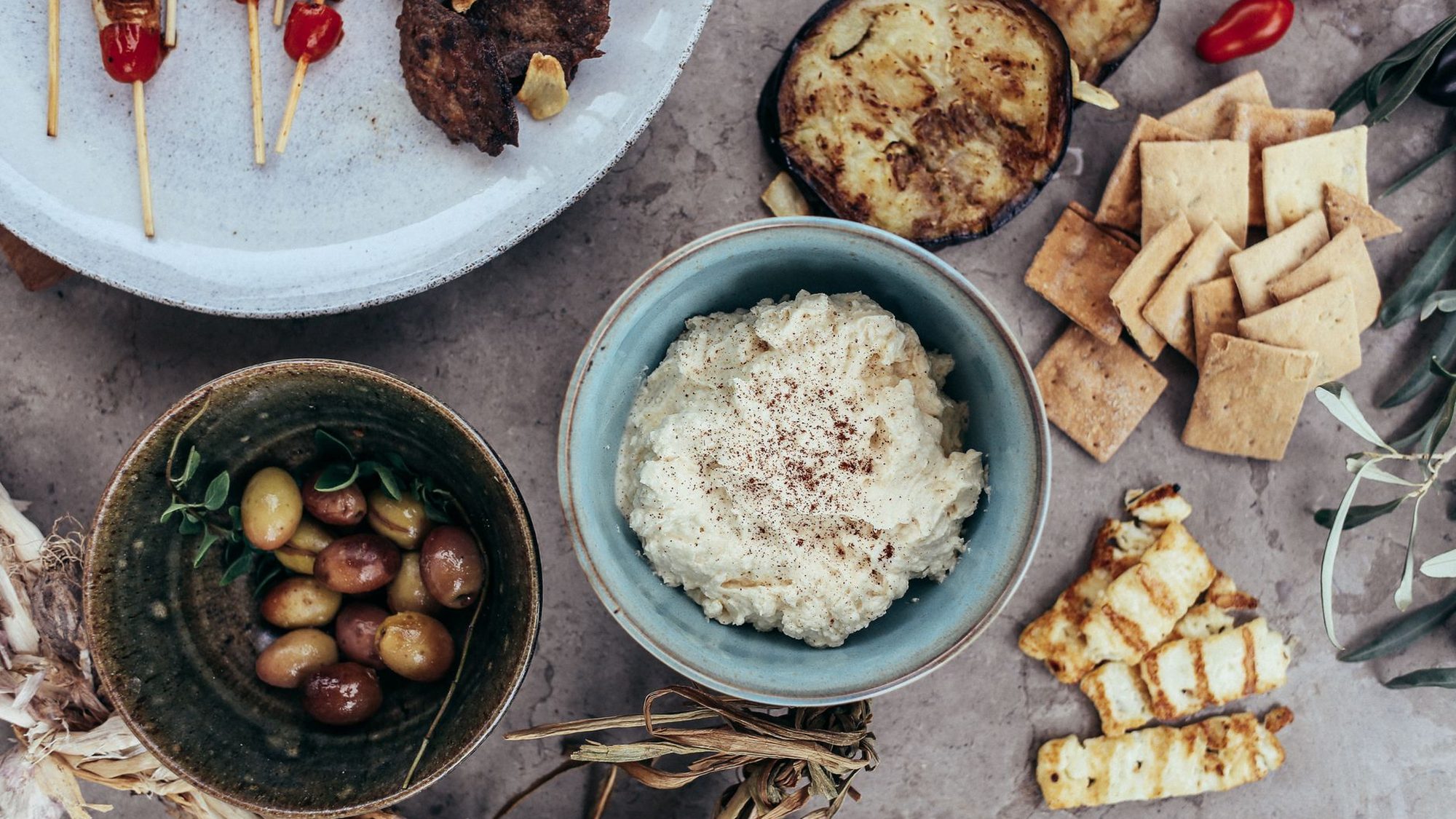
The Mediterranean diet is not a diet programme with forbidden foods, but a pattern: plenty of vegetables, legumes, whole grains and olive oil as the main fat source, along with fish several times a week, moderate amounts of poultry and dairy, and red meat only rarely. Wine — if at all — only in moderation and usually with meals. The focus is on unprocessed, seasonal foods.
The concept goes back to American nutritionist Ancel Keys, who in the 1960s observed that people in Crete and southern Italy died far less often from heart disease than North Americans, despite comparatively high fat consumption. What fascinated him was not a single nutrient, but the overall picture of the diet. This observation laid the foundation for decades of research.
The most important studies at a glance
The PREDIMED study (Prevención con Dieta Mediterránea) is one of the most extensive nutritional intervention studies ever conducted. Over 7,400 people with elevated cardiovascular risk were observed in Spain. Those who followed a Mediterranean diet — supplemented with extra-virgin olive oil or nuts — had a significantly lower risk of heart attack, stroke and cardiovascular death than the control group on a reduced-fat diet.
The Lyon Diet Heart Study in the mid-1990s examined whether a Mediterranean diet after a heart attack reduces the risk of relapse. The result was so clear-cut that the study was terminated early: the Mediterranean group had significantly fewer cardiac events than the control group. Meta-analyses by nutritionist Francesco Sofi confirm: those who consistently follow the Mediterranean pattern have a demonstrably lower overall mortality risk.
What specifically works — and why
Olive oil provides monounsaturated fatty acids and polyphenols such as oleocanthal, which is attributed with anti-inflammatory properties. Fatty fish such as sardines and mackerel supply omega-3 fatty acids, which can lower triglyceride levels. Legumes, vegetables and whole grains provide soluble dietary fibre that stabilises blood sugar and nourishes the microbiome.
Interestingly, the combination appears to achieve more than the sum of its parts. Researcher Antonia Trichopoulou of the University of Athens has shown in meta-analyses that a high overall adherence score — meaning fidelity to the pattern as a whole — correlates better with favourable health outcomes than the consumption of any single food. This supports the idea of synergy between the components.
Limitations and open questions
The PREDIMED study was retracted in 2013 due to methodological errors in randomisation and re-published in 2018 with corrected data. The core findings remained intact, but the incident is a reminder that even well-evidenced nutrition studies should be read carefully. Many studies on the Mediterranean diet are observational studies — they show associations, not causality.
The Mediterranean diet is also not a uniform concept: eating on Crete differs from that in North Africa or Turkey. People living in northern Europe have different access to fresh ingredients. The basic principle can nevertheless be applied — it doesn't require an authentic copy, just the pattern.
What you can practically adopt in your everyday life
You don't need to overhaul everything at once. According to the study evidence, three adjustments have the greatest impact: use olive oil as your primary fat source (instead of butter or margarine), plan at least two servings of legumes per week, and have fish twice a week — at least once with fatty fish such as sardines, mackerel or salmon.
Quantities matter too: around 30 to 40 grams of olive oil per day (about three tablespoons) corresponds to what was used as a supplement in PREDIMED. Eating a handful of mixed nuts (around 30 g) daily covers another well-evidenced building block. Herbs and garlic instead of salt, plenty of colourful vegetables, few processed products — that's the framework.
Embedding it in everyday life with YUTHI
In the YUTHI app you can specifically track how often Mediterranean core elements appear in your week: legumes, fish, olive oil as the main fat source. No calorie counting — just a look at patterns. When you see that certain elements are regularly missing, small targeted changes are easier to establish than a complete overhaul. The app helps you make connections between your diet and other areas like energy and sleep visible over time.
That was the snapshot. The app turns it into daily support.
Measure every day instead of calculating once: Vito or Vita puts your numbers in context, builds you a weekly plan and speaks up when something stands out.
Launching at the end of 2026 — iPhone first, Android to follow. Let me know when it’s out ↓
Sources
- Estruch R. et al. Primary Prevention of Cardiovascular Disease with a Mediterranean Diet Supplemented with Extra-Virgin Olive Oil or Nuts. N Engl J Med. 2018;378(25):e34.
- de Lorgeril M. et al. Mediterranean diet, traditional risk factors, and the rate of cardiovascular complications after myocardial infarction. Circulation. 1999;99(6):779–785.
- Trichopoulou A. et al. Adherence to a Mediterranean diet and survival in a Greek population. N Engl J Med. 2003;348(26):2599–2608.
- Sofi F. et al. Adherence to Mediterranean diet and health status: meta-analysis. BMJ. 2008;337:a1344.