
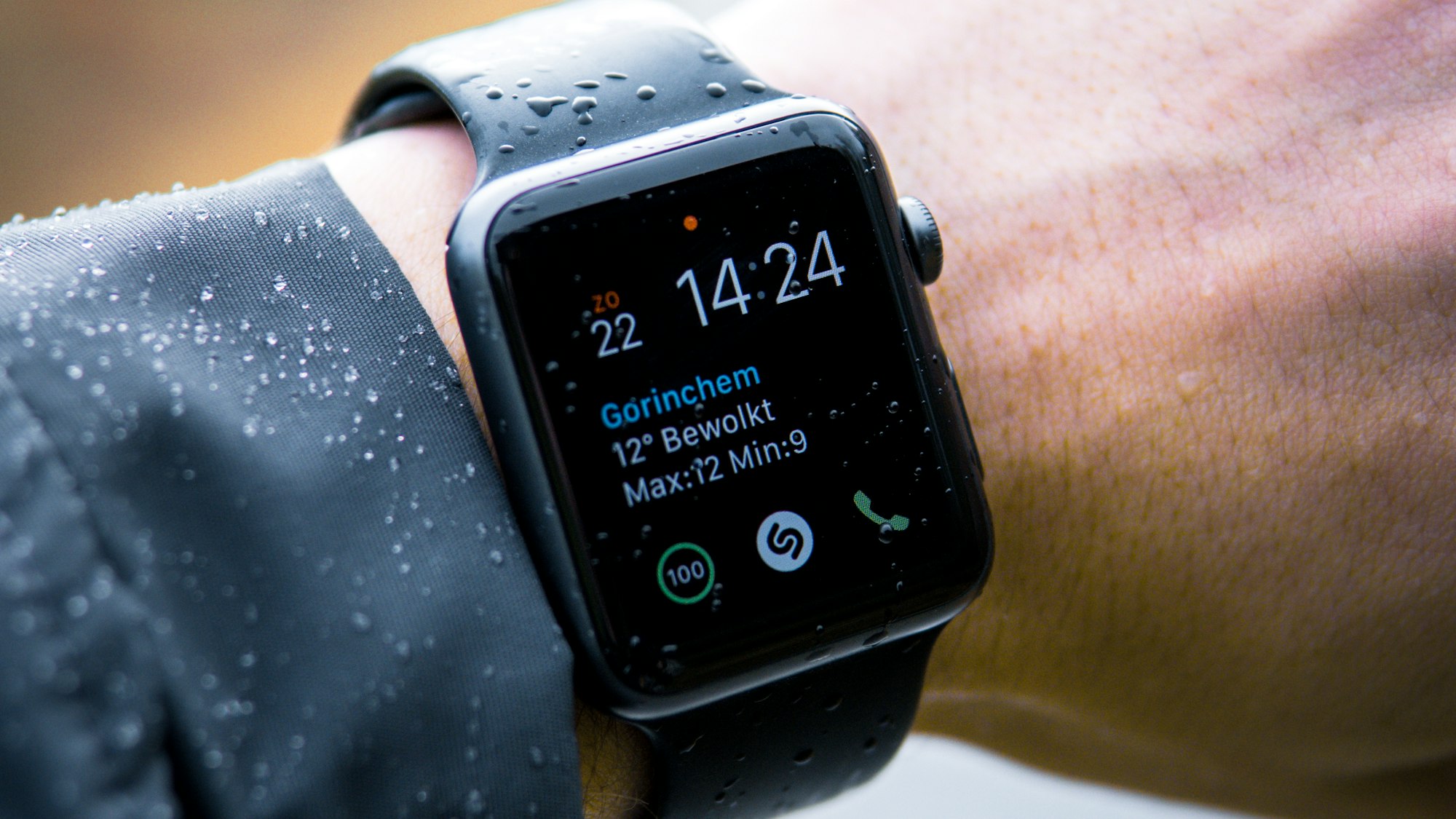
Wearables reality check: what ring and watch actually measure
Ring, watch and chest strap promise a look inside your own body. What the data is really worth – and how to use it sensibly without driving yourself crazy.
What a wearable actually measures
A ring or watch measures three raw values: acceleration via a motion sensor, changes in blood volume via green or red light on the skin, and skin temperature. Everything else — steps, calories, sleep stages, recovery score, stress level — is calculated from these three values.
This distinction is the key to understanding it. A measured value has a measurement accuracy. A calculated value additionally carries the uncertainty of the calculation method — and that method differs between every manufacturer and is usually not disclosed.
How accurate the individual readings are
Fuller and colleagues reviewed fifty-eight studies on common devices in 2020. Steps are the most reliably tracked: the deviation is usually under ten percent. Resting heart rate is also good, with deviations of around three percent.
The picture is considerably worse for energy expenditure: depending on the device and activity, readings were off by between twenty and fifty percent. If you base your nutrition on the calorie count shown, you're working with a number that can be wrong by several hundred kilocalories.
Heart rate variability as the most useful signal
The value that brings the most practical benefit is heart rate variability during sleep. Plews and colleagues showed in 2013 with endurance athletes that its trend detects overtraining earlier than your own sense of how you feel — provided you read the weekly average and not the daily value.
Because the variation from night to night is large: alcohol, a late meal, an oncoming infection, or simply a short night all change it noticeably. Only the trend over seven days carries a meaningful signal. And the absolute value is worthless when comparing two people — it can differ by multiples.
Sleep: read with a sense of proportion
Good devices have become reasonably reliable at distinguishing sleep from wakefulness. The breakdown into light, deep, and REM sleep is a different story: compared with polysomnography in a sleep lab, it is accurate in only around half to two thirds of cases, depending on the phase.
A low deep-sleep reading is therefore not a finding but an estimate. If it causes you to sleep worse, the device is doing you more harm than good. The sleep value only becomes useful when you place it next to your behaviour — alcohol, training time, bedtime.
How to make a wearable useful
Three rules make the difference. First: compare yourself only with yourself, never with others. Second: read weeks, not days — a single night or a single score tells you practically nothing. Third: pair every number with an action, otherwise it stays meaningless.
And the most important rule: when the device and your body's perception diverge, your body is right. A wearable is a behavioural mirror, not a diagnostic tool. For persistent fatigue, breathing pauses during sleep, or heart rhythm issues, assessment belongs in a doctor's practice — this content does not replace medical advice.
How the YUTHI app helps you
YUTHI pulls data from Apple Health, no matter which device it comes from — and places it next to what you log yourself. That's exactly where the value lies: not the number alone, but the number alongside alcohol, exercise, caffeine, and mood.
Vito and Vita show weekly trends rather than daily scores and flag when a number doesn't have enough data behind it. And they put things in context — an estimated calorie count is treated as an estimate, not a fact.
That was the snapshot. The app turns it into daily support.
Measure every day instead of calculating once: Vito or Vita puts your numbers in context, builds you a weekly plan and speaks up when something stands out.
Launching at the end of 2026 — iPhone first, Android to follow. Let me know when it’s out ↓
Sources
- Fuller D, Colwell E, Low J, et al. Reliability and Validity of Commercially Available Wearable Devices for Measuring Steps, Energy Expenditure, and Heart Rate: Systematic Review. JMIR Mhealth Uhealth. 2020;8(9):e18694.
- Plews DJ, Laursen PB, Stanley J, Kilding AE, Buchheit M. Training adaptation and heart rate variability in elite endurance athletes: opening the door to effective monitoring. Sports Med. 2013;43(9):773-781.
- Chinoy ED, Cuellar JA, Huwa KE, et al. Performance of seven consumer sleep-tracking devices compared with polysomnography. Sleep. 2021;44(5):zsaa291.
- Shcherbina A, Mattsson CM, Waggott D, et al. Accuracy in Wrist-Worn, Sensor-Based Measurements of Heart Rate and Energy Expenditure in a Diverse Cohort. J Pers Med. 2017;7(2):3.