
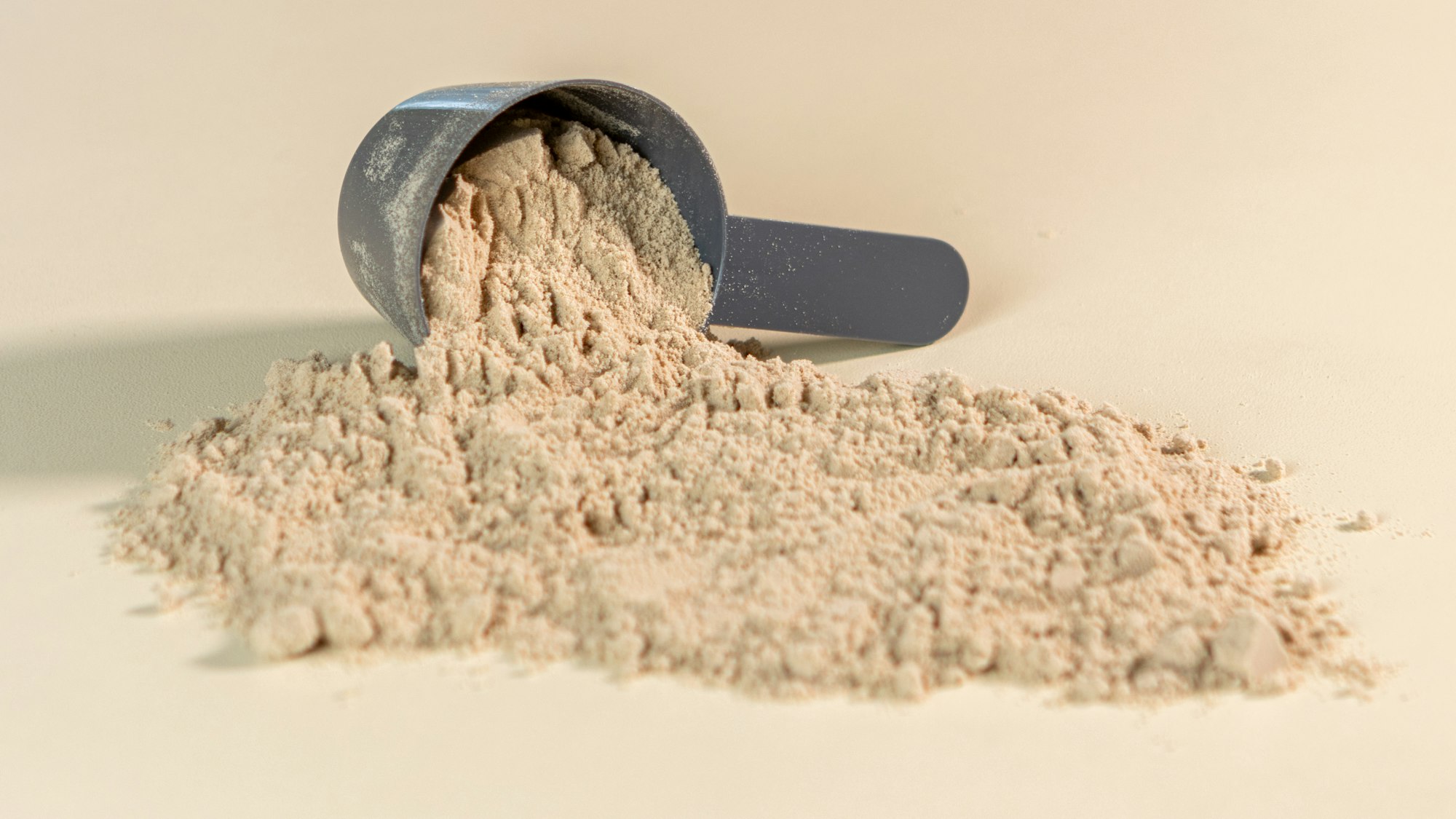
Creatine: not just for muscles, but also for the brain?
Creatine is one of the most thoroughly researched dietary supplements there is. What it can do for strength, ageing and even concentration – and what it cannot.
What creatine does in the body
Creatine is not a foreign substance — it's a compound the body produces itself. The liver synthesises around one gram per day, with roughly another gram coming from food, mainly red meat and fish. It is stored almost entirely in muscle, as creatine phosphate.
There it serves one single, important function: during very short, very intense efforts it rapidly replenishes energy by recharging spent ATP. This store lasts only a few seconds. That is precisely why creatine works for sprinting and heavy lifting — not for marathons.
Strength and muscle mass: the best-supported benefit
Creatine monohydrate is one of the most thoroughly researched supplements of all. Kreider et al. summarised hundreds of studies for the International Society of Sports Nutrition in 2017: combined with strength training, it reliably increases maximal strength and lean mass beyond what training alone achieves.
The standard dose is three to five grams of monohydrate daily, taken continuously. A loading phase of twenty grams over five days fills stores faster, but is not necessary — after three to four weeks the lower dose achieves the same. More expensive forms offer no proven additional benefit.
The brain: interesting, but less established
The brain also uses creatine phosphate as an energy buffer. Avgerinos et al. analysed six studies in healthy individuals in 2018 and found improvements in short-term memory and processing speed — most pronounced in vegetarians and older adults, where baseline stores tend to be lower.
Findings under stress are particularly striking: during sleep deprivation or mental fatigue, the effect was stronger than in a well-rested state. The studies are small, however, and the effects moderate. Creatine is not a memory enhancer — but as a buffer during periods of poor sleep it is worth trying.
Safety: what is established and what is a myth
The most persistent concern involves the kidneys. Antonio et al. systematically addressed common objections in 2021: in people with healthy kidneys, long-term studies of up to five years show no sign of damage. The elevated creatinine level in the blood is a measurement effect, not kidney damage.
Claims about hair loss, subcutaneous water retention, and muscle cramps also don't hold up to scrutiny. What is true: body weight rises initially by one to two kilograms because muscle retains water — in the muscle, not beneath the skin. If you have an existing kidney condition or are pregnant, discuss taking creatine with a doctor first.
In practice: what it costs and what to look for
Creatine monohydrate is one of the most affordable supplements available: one kilogram costs between twenty and thirty francs depending on the supplier, and at four grams per day that lasts around eight months. Look for pure monohydrate without additives; a quality seal such as the Cologne List is worth having if you compete.
Timing matters very little — what counts is consistency, because the goal is filling a store, not achieving an acute effect. Stir it into water or a shake; it is flavourless. Without training and sufficient protein, however, the effect on muscle will remain small.
How the YUTHI app helps you
In the app you log creatine as a supplement with your dose and see it alongside your training data, weight, and strength progress. The initial weight gain in particular can be put in the right context this way, rather than being mistaken for fat gain.
Vito and Vita remind you to take it daily, because that is exactly where creatine most often falls short — not because it doesn't work, but because people forget. And after eight weeks they'll show you what has actually changed in your training weights.
That was the snapshot. The app turns it into daily support.
Measure every day instead of calculating once: Vito or Vita puts your numbers in context, builds you a weekly plan and speaks up when something stands out.
Launching at the end of 2026 — iPhone first, Android to follow. Let me know when it’s out ↓
Sources
- Kreider RB, Kalman DS, Antonio J, et al. International Society of Sports Nutrition position stand: safety and efficacy of creatine supplementation in exercise, sport, and medicine. J Int Soc Sports Nutr. 2017;14:18.
- Avgerinos KI, Spyrou N, Bougioukas KI, Kapogiannis D. Effects of creatine supplementation on cognitive function of healthy individuals: A systematic review of randomized controlled trials. Exp Gerontol. 2018;108:166-173.
- Antonio J, Candow DG, Forbes SC, et al. Common questions and misconceptions about creatine supplementation: what does the scientific evidence really show? J Int Soc Sports Nutr. 2021;18(1):13.
- Rae C, Digney AL, McEwan SR, Bates TC. Oral creatine monohydrate supplementation improves brain performance: a double-blind, placebo-controlled, cross-over trial. Proc Biol Sci. 2003;270(1529):2147-2150.