
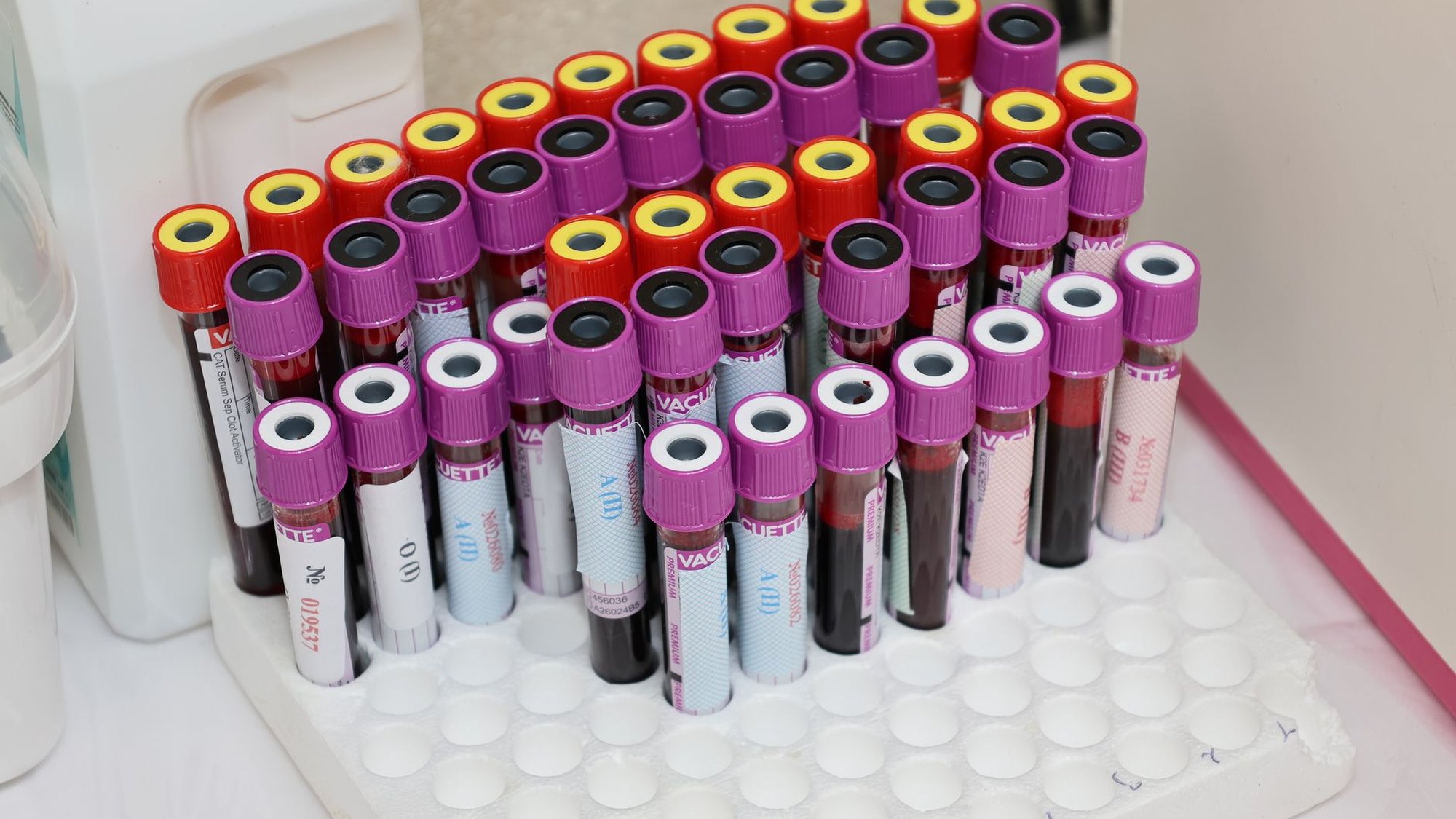
Homocysteine: The overlooked marker for heart, brain and cellular ageing
Homocysteine rarely appears in standard blood panels — even though the research shows that elevated levels can be associated with a higher risk of heart attack, stroke and cognitive decline. What you should know about this marker.
What homocysteine is and how it forms in the body
Homocysteine is a sulphur-containing amino acid that forms as an intermediate product during the breakdown of the essential amino acid methionine. You take in methionine daily through dietary protein — from meat, eggs, dairy products and legumes. Under normal conditions, homocysteine is processed via one of two pathways: either back to methionine (with the involvement of folate and vitamin B12) or to cysteine (with the involvement of vitamin B6).
When this breakdown slows down — because B vitamins are lacking, genetic variants impair the enzymes, or the body is under chronic stress — homocysteine accumulates in the blood. It can be measured easily: a fasting blood test is all that is needed. Normal values are typically below 10 µmol/l. Values between 10 and 15 µmol/l are considered mildly elevated, above 15 µmol/l significantly elevated (hyperhomocysteinaemia).
What elevated homocysteine levels signal
Large observational studies show that elevated homocysteine is associated with a higher risk of cardiovascular disease: coronary artery disease, heart attack, stroke and peripheral arterial disease. A 2002 meta-analysis published in the Journal of the American Medical Association with more than 5,000 cases showed: a rise in homocysteine of 5 µmol/l is associated with roughly a 20 percent increase in the risk of heart disease.
There is also evidence for brain health: a 2010 study by Smith and colleagues showed that B-vitamin supplementation in people with mild cognitive impairment and elevated homocysteine slowed the rate of brain atrophy. Elevated homocysteine is also associated with epigenetic changes that can influence cellular ageing processes.
Vitamin B12, folate and B6: The three most important influencing factors
Folate (vitamin B9), vitamin B12 and vitamin B6 are the central cofactors for homocysteine metabolism. Deficiencies in these nutrients are the most common measurable cause of elevated homocysteine levels. An elevated homocysteine value is therefore often an indirect sign of deficiency states that have not yet produced classic deficiency symptoms.
MTHFR gene variants (C677T, A1298C) can slow folate processing and thus contribute to homocysteine accumulation. If a genetic cause is suspected, combined testing of homocysteine and MTHFR makes sense. At the same time, the evidence shows that a balanced diet with adequate green vegetables, legumes and animal proteins is sufficient in many cases to normalise the value.
The intervention paradox: lowering alone is not necessarily enough
An important caveat when interpreting the data: several randomised trials in which B vitamins were used specifically to lower homocysteine were unable to demonstrate a reduction in heart attacks or strokes despite lower homocysteine levels. The so-called homocysteine paradox remains an area of ongoing research.
This does not mean homocysteine is irrelevant. It means the causality is more complex than initially assumed. Elevated homocysteine is likely a biomarker indicating a disrupted metabolic environment — not the sole cause of vascular damage. Knowing and correcting the value remains worthwhile; expecting it to eliminate all risks would be an overinterpretation.
When a homocysteine test makes sense
A homocysteine test makes sense if you have an elevated cardiovascular risk, follow a vegan or vegetarian diet (increased B12 risk), are older (B12 absorption decreases with age), have a known MTHFR variant, or experience fatigue, difficulty concentrating or tingling in your limbs that have no other explanation. The test is affordable and straightforward and can alert older patients to deficiency states that are often overlooked.
Homocysteine should be measured fasting — meals can temporarily raise the value. Anyone taking the result seriously and wanting to take action should also have folate, vitamin B12, and vitamin B6 tested to better identify the cause of an elevated level.
Tracking your homocysteine trend with the YUTHI app
In the YUTHI app, you can log your homocysteine level after each blood test and watch how it develops over time. If you retest after adjusting your diet or starting B-vitamin supplementation, the app shows you directly whether and by how much the value has changed — a concrete basis for your next conversation with your doctor.
That was the snapshot. The app turns it into daily support.
Measure every day instead of calculating once: Vito or Vita puts your numbers in context, builds you a weekly plan and speaks up when something stands out.
Launching at the end of 2026 — iPhone first, Android to follow. Let me know when it’s out ↓
Sources
- Homocysteine Studies Collaboration. Homocysteine and risk of ischemic heart disease and stroke: a meta-analysis. JAMA, 2002;288(16):2015–2022.
- Smith AD et al. Homocysteine-lowering by B vitamins slows the rate of accelerated brain atrophy in mild cognitive impairment. PLoS ONE, 2010;5(9):e12244.
- Selhub J. Homocysteine metabolism. Annual Review of Nutrition, 1999;19:217–246.
- Lonn E et al. Homocysteine lowering with folic acid and B vitamins in vascular disease. New England Journal of Medicine, 2006;354(15):1567–1577.