
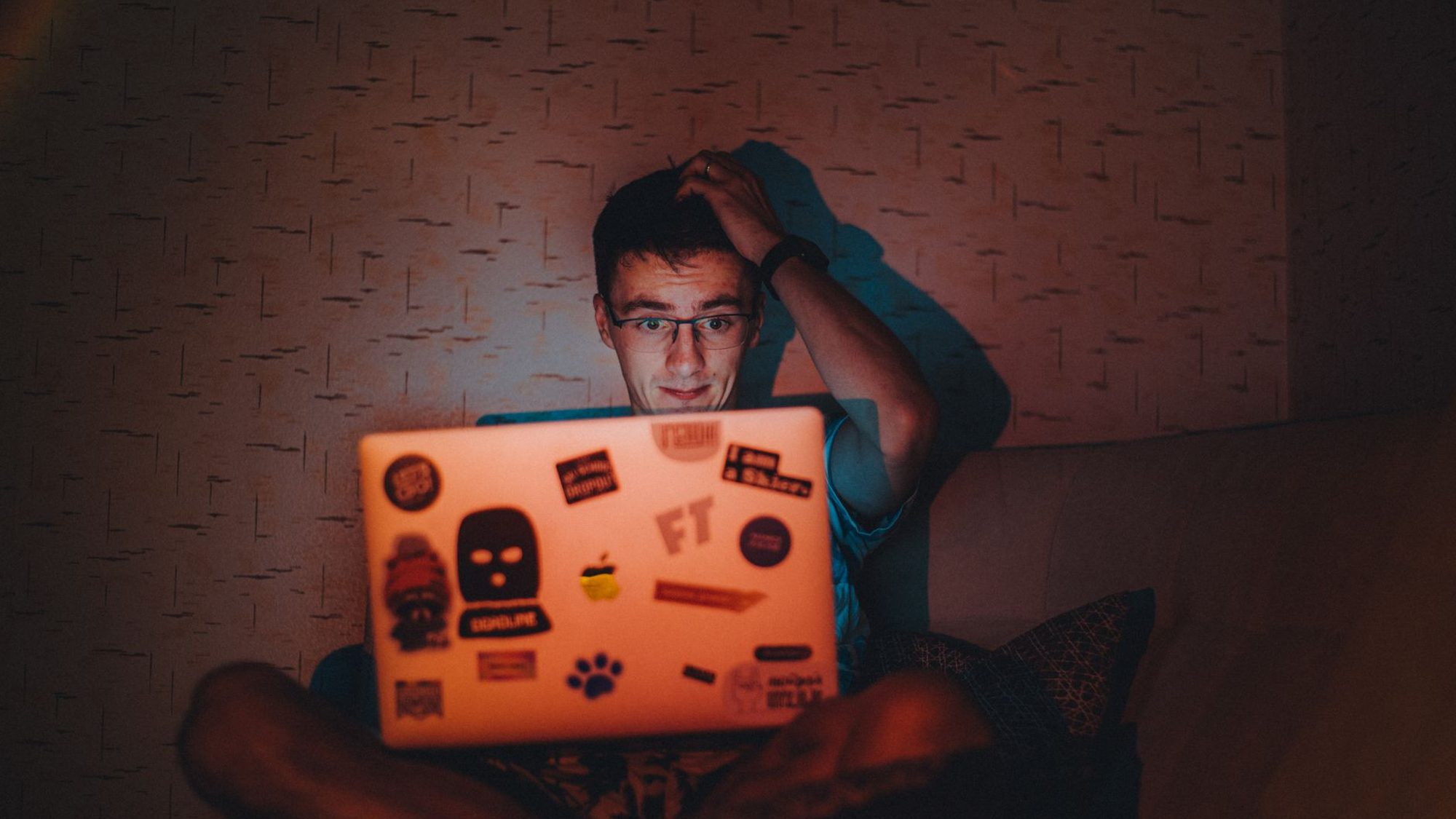
Blue Light & Melatonin: How screens affect your sleep hormone
Almost everyone checks their smartphone or laptop in the evening — but what does that light do to your sleep hormone? How blue light suppresses melatonin production and what you can do about it.
The light-melatonin system
Melatonin is released by the pineal gland in the brain and signals to the body: it's getting dark, time to sleep. Levels normally rise one to two hours before your usual bedtime and peak between 2 and 4 a.m. Light — especially in the blue wavelength range around 480 nanometres — suppresses this release.
The connection between light and melatonin runs through a special class of retinal cells called intrinsically photosensitive retinal ganglion cells. They contain the light pigment melanopsin, which is particularly sensitive to short-wavelength blue light. Signals from these cells travel via the optic nerve directly to the suprachiasmatic nucleus, the brain's main biological pacemaker.
What screens actually do
A widely cited study by Anne-Marie Chang's group at Harvard compared e-book readers with printed books: participants who read on an LED screen for four hours each evening over five nights showed a 1.5-hour delay in melatonin onset compared to the print group, fell asleep an average of 10 minutes later, and felt sleepier the following morning.
Joshua Gooley and colleagues showed that even ordinary room lighting at 200 lux before sleep can suppress melatonin secretion by up to 71 % and delay its onset by 90 minutes — compared to very dim light. Screens typically deliver 50 to 200 lux directly into the eye.
What helps — and what doesn't do much
Night-mode software and blue-light-filtering glasses are often marketed as solutions. The evidence here is more nuanced: night-mode features reduce the blue component, but not always sufficiently, and studies found the effects on melatonin and sleep were often small or inconsistent. The biggest effect comes from distance and intensity: the brighter and closer the screen, the stronger the impact.
Amber-tinted glasses with a broader blue-light filter show stronger effects on melatonin levels in some studies than simple filter lenses. The most effective measure, however, remains reducing screen time in the 60 to 90 minutes before sleep.
Morning light as a countermeasure
The light system works in both directions: bright light in the morning — ideally direct daylight within the first 30 minutes after waking — anchors your rhythm and makes the system more responsive to evening darkness overall. This effect is well established and costs nothing.
Warm ambient lighting in the evening below 10 lux — for example candles or dimmed lamps with a warm white tone — further reduces the overall light load. Lots of light during the day, little in the evening: this is the simplest and most effective biohacking protocol for the melatonin system.
Tracking light and sleep in the YUTHI app
In the YUTHI app, log your sleep onset and wake-up patterns and note how long you looked at screens in the evening. If you systematically reduce your screen time in the evenings for two weeks, you can see in the timeline whether your time to fall asleep and your subjective sleep quality have changed.
If you use a wearable with sleep tracking, you can enter your REM share and deep sleep phases as additional data points. This builds a personal picture that tells you whether and how light changes actually affect you.
That was the snapshot. The app turns it into daily support.
Measure every day instead of calculating once: Vito or Vita puts your numbers in context, builds you a weekly plan and speaks up when something stands out.
Launching at the end of 2026 — iPhone first, Android to follow. Let me know when it’s out ↓
Sources
- Chang AM et al. Evening use of light-emitting eReaders negatively affects sleep, circadian timing, and next-morning alertness. PNAS, 112(4):1232–1237, 2015.
- Gooley JJ et al. Exposure to room light before bedtime suppresses melatonin onset and shortens melatonin duration in humans. Journal of Clinical Endocrinology & Metabolism, 96(3):E463–E472, 2011.
- Cajochen C et al. Evening exposure to a light-emitting diodes (LED)-backlit computer screen affects circadian physiology and cognitive performance. Journal of Applied Physiology, 110(5):1432–1438, 2011.