
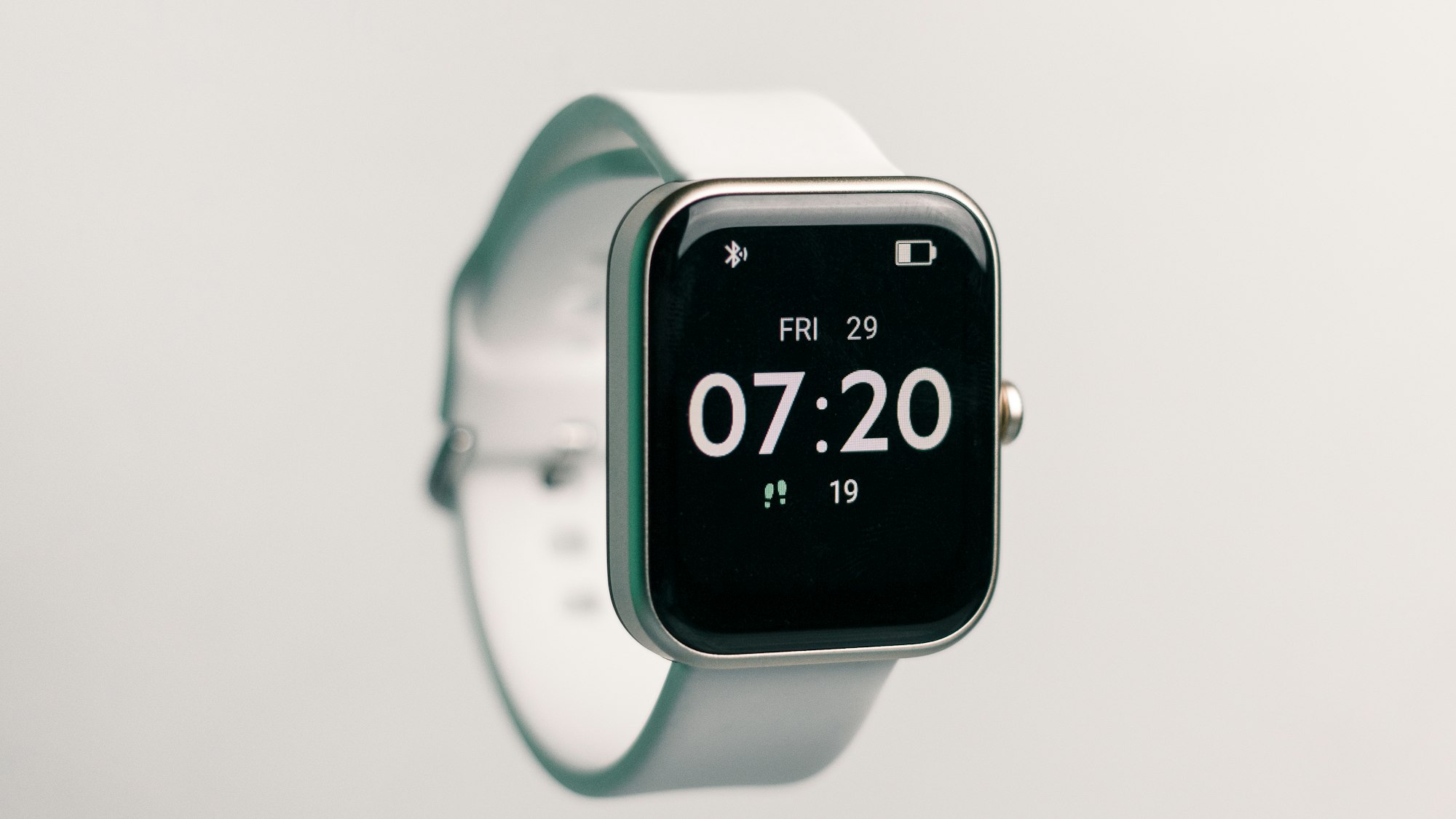
Sleep tracking: how accurate are ring and watch really?
Morning score, sleep-phase chart, recovery value: sleep trackers present themselves as precise. What they can actually do – and when the data does more harm than good.
What a ring or watch actually measures
No consumer device measures sleep directly. What's measured is movement via an accelerometer, heart rate and heart rate variability via light on the skin, often skin temperature, and sometimes oxygen saturation. From these raw values, an algorithm estimates when you're asleep and which phase you're in.
The gold standard is something different: polysomnography in a sleep lab records brain waves, eye movements and muscle tension. Only that allows sleep phases to be truly identified. Everything a ring on your finger displays is an estimate based on indirect signals — sometimes accurate, sometimes off.
How accurate these devices actually are
Chinoy and colleagues compared seven common devices against polysomnography in a sleep lab in 2021. At distinguishing sleep from wakefulness, the better devices performed well: they correctly identified over 90 percent of sleep time. Total sleep duration was usually only a few minutes off.
Sleep stage classification was a different story. Assigning light sleep, deep sleep and REM sleep correctly ranged from about half to two thirds of cases, depending on the device and phase. Detecting quiet wakefulness while in bed was also difficult — devices frequently interpret lying still while awake as sleep, making the night look better than it was.
Orthosomnia: when the score makes sleep worse
Baron and colleagues described in 2017 a pattern they were seeing increasingly in their sleep clinic: people who were sleeping well but were convinced they slept poorly — because their tracker said so. They called it orthosomnia, modelled on orthorexia, the obsessive drive to eat healthily.
The mechanism is uncomfortable: the pursuit of the perfect night creates tension, tension worsens sleep, the worse score reinforces the pursuit. Some affected people stayed in bed longer to boost the score — and in doing so made exactly the sleep quality they wanted to improve even worse.
How to make the data useful
Read trends, not individual nights. A single night tells you almost nothing, because both sleep itself and the measurement fluctuate. Over two to four weeks, however, reliable patterns emerge — and those are what you can build on.
Things get especially revealing when you put your behaviour alongside it: alcohol in the evening, late meals, late workouts, caffeine after 3 pm. The tracker then becomes a mirror of your behaviour, not a verdict on your night. The most important metric remains unmeasurable anyway: how awake and energised you feel during the day.
When you need a doctor, not an app
A tracker doesn't make a diagnosis. If your partner notices pauses in your breathing, if you wake up with headaches or a dry mouth, or if you're fighting to keep your eyes open at the wheel, that needs to be checked out — no ring reliably detects sleep apnea, even if some devices display oxygen levels.
The same applies to persistent insomnia lasting more than three months. There is an effective treatment for that: cognitive behavioural therapy for insomnia. No score and no app can replace it. This content is general information and not medical advice.
How the YUTHI app helps you
YUTHI pulls sleep data from Apple Health, regardless of which device it comes from — and places it alongside what you log yourself. That combination is exactly where the value lies: not the score alone, but the score next to alcohol, exercise, caffeine, and mood.
Vito and Vita show you weekly comparisons instead of nightly grades, and point out what keeps repeating. And they'll tell you when a number doesn't have enough basis: three nights is not a pattern.
That was the snapshot. The app turns it into daily support.
Measure every day instead of calculating once: Vito or Vita puts your numbers in context, builds you a weekly plan and speaks up when something stands out.
Launching at the end of 2026 — iPhone first, Android to follow. Let me know when it’s out ↓
Sources
- Chinoy ED, Cuellar JA, Huwa KE, et al. Performance of seven consumer sleep-tracking devices compared with polysomnography. Sleep. 2021;44(5):zsaa291.
- Baron KG, Abbott S, Jao N, Manalo N, Mullen R. Orthosomnia: Are Some Patients Taking the Quantified Self Too Far? J Clin Sleep Med. 2017;13(2):351-354.
- de Zambotti M, Cellini N, Goldstone A, Colrain IM, Baker FC. Wearable Sleep Technology in Clinical and Research Settings. Med Sci Sports Exerc. 2019;51(7):1538-1557.
- Chinoy ED, Cuellar JA, Jameson JT, Markwald RR. Performance of Four Commercial Wearable Sleep-Tracking Devices Tested Under Unrestricted Conditions at Home in Healthy Young Adults. Nat Sci Sleep. 2022;14:493-516.