
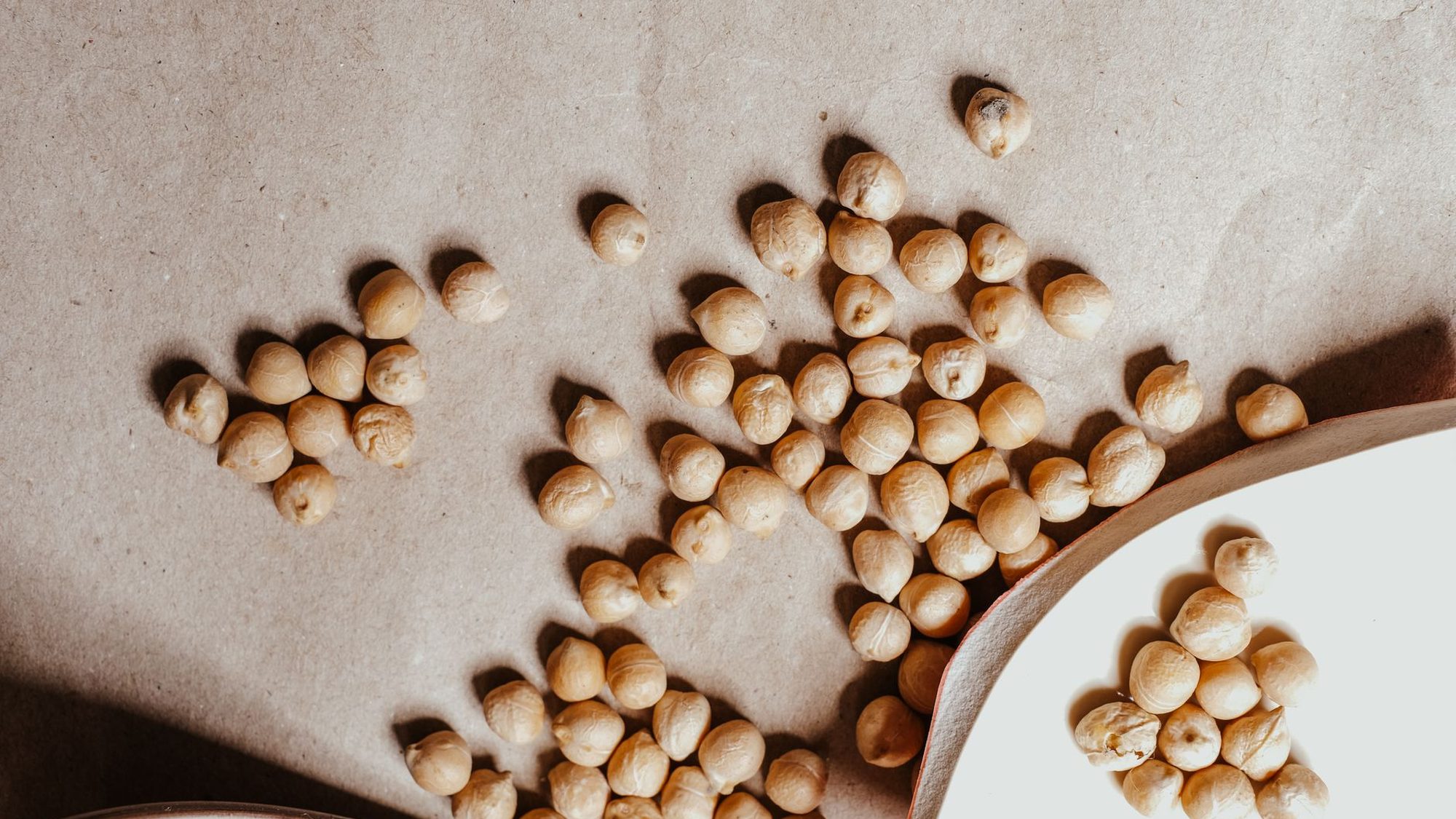
Plant vs. animal protein: What the research recommends
Whey or lentils? Meat or legumes? The question of the best protein source is not just a matter of taste — it comes down to amino acids, bioavailability and long-term health.
Why not all proteins are equal
Protein is not just protein. What matters is the amino acid composition — in particular the content of essential amino acids that the body cannot produce on its own and must obtain from food. Among these, the branched-chain amino acids (BCAAs) — above all leucine — play a key role in muscle protein synthesis.
Animal protein sources such as meat, fish, eggs and dairy contain all essential amino acids in a balanced ratio — they are called complete proteins. Plant sources such as legumes, grains and nuts are limited in one or more essential amino acids. Lentils contain little methionine, rice little lysine. This does not mean that plant protein is inferior — it means that combination is key.
Bioavailability: what actually reaches the muscle
One measure of protein quality is the DIAAS score (Digestible Indispensable Amino Acid Score), which takes into account both the amino acid profile and digestibility. Egg and milk protein reach DIAAS values above 1.0, whey isolate even higher. Soy achieves good values (0.90–1.0), pea protein comes in at around 0.82, and wheat below 0.50.
In practice, this means: if you want to optimise muscle building and rely on animal protein, you have slightly higher leucine bioavailability. If you eat plant-based, you can compensate for this difference with somewhat higher total protein amounts and smart combinations. Soy and pea protein isolates are now coming very close to whey in studies on muscle protein synthesis.
What long-term studies show on health outcomes
Several large observational studies — including the Harvard Nurses' Health Study and the Health Professionals Follow-up Study — show that replacing red processed meat with plant protein sources is associated with a lower risk of heart disease and type 2 diabetes. Unprocessed red meat shows weaker associations than processed meat (sausage, ham).
A meta-analysis published in JAMA Internal Medicine in 2020 concludes that a greater share of plant protein is associated with lower all-cause mortality. Causality has not been clearly proven — people who eat a lot of plant protein often live a generally healthier lifestyle. But the direction of the findings is consistent.
Muscle building and preservation with age: what the research shows
For muscle building, total protein intake is what counts, not the source. The research group led by Luc van Loon has shown that older adults following a plant-based diet achieve similar muscle building results as peers eating animal sources — provided total protein intake and leucine supply are adequate. With plant-based eating, this generally requires somewhat higher amounts.
From age 50 onwards, muscle protein synthesis naturally declines and so-called anabolic resistance increases. This makes adequate protein from all sources more important — and at the same time makes the difference between animal and plant protein smaller when total intake is sufficient. More important is the distribution throughout the day: at least three meals with 25 to 40 g of protein each activate muscle protein synthesis more effectively than one large evening portion.
How to combine — practical guidance
Classic plant-based combinations complement each other naturally: rice and lentils (traditional in many cultures worldwide), wholegrain bread and legumes, hummus and flatbread. These combinations don't have to be in the same meal — being balanced across the day is enough.
Soy is the only plant source that contains all essential amino acids in sufficient quantities — comparable to animal sources. Tofu, edamame, tempeh and soy drinks are good options. For people who eat both — animal and plant sources — many nutrition researchers recommend diversifying protein intake: not exclusively meat, but also not exclusively plant-based.
Tracking your protein distribution with YUTHI
In the YUTHI app you can log when you eat protein and from which sources. Three meals with enough protein spread across the day — that is the core principle supported by the research. Whether it comes from legumes, fish, eggs or a mix is secondary. The app helps you spot patterns: are you eating too much protein all at once, or is it sensibly spread across the day?
That was the snapshot. The app turns it into daily support.
Measure every day instead of calculating once: Vito or Vita puts your numbers in context, builds you a weekly plan and speaks up when something stands out.
Launching at the end of 2026 — iPhone first, Android to follow. Let me know when it’s out ↓
Sources
- Gorissen SHM. et al. Protein content and amino acid composition of commercially available plant-based protein isolates. Amino Acids. 2018;50(12):1685–1695.
- Song M. et al. Association of Animal and Plant Protein Intake With All-Cause and Cause-Specific Mortality. JAMA Intern Med. 2016;176(10):1453–1463.
- van Vliet S. et al. The Skeletal Muscle Anabolic Response to Plant- versus Animal-Based Protein Consumption. J Nutr. 2015;145(9):1981–1991.
- Wilkinson SB. et al. Consumption of fluid skim milk promotes greater muscle protein accretion after resistance exercise than does consumption of an isonitrogenous and isoenergetic soy-protein beverage. Am J Clin Nutr. 2007;85(4):1031–1040.