
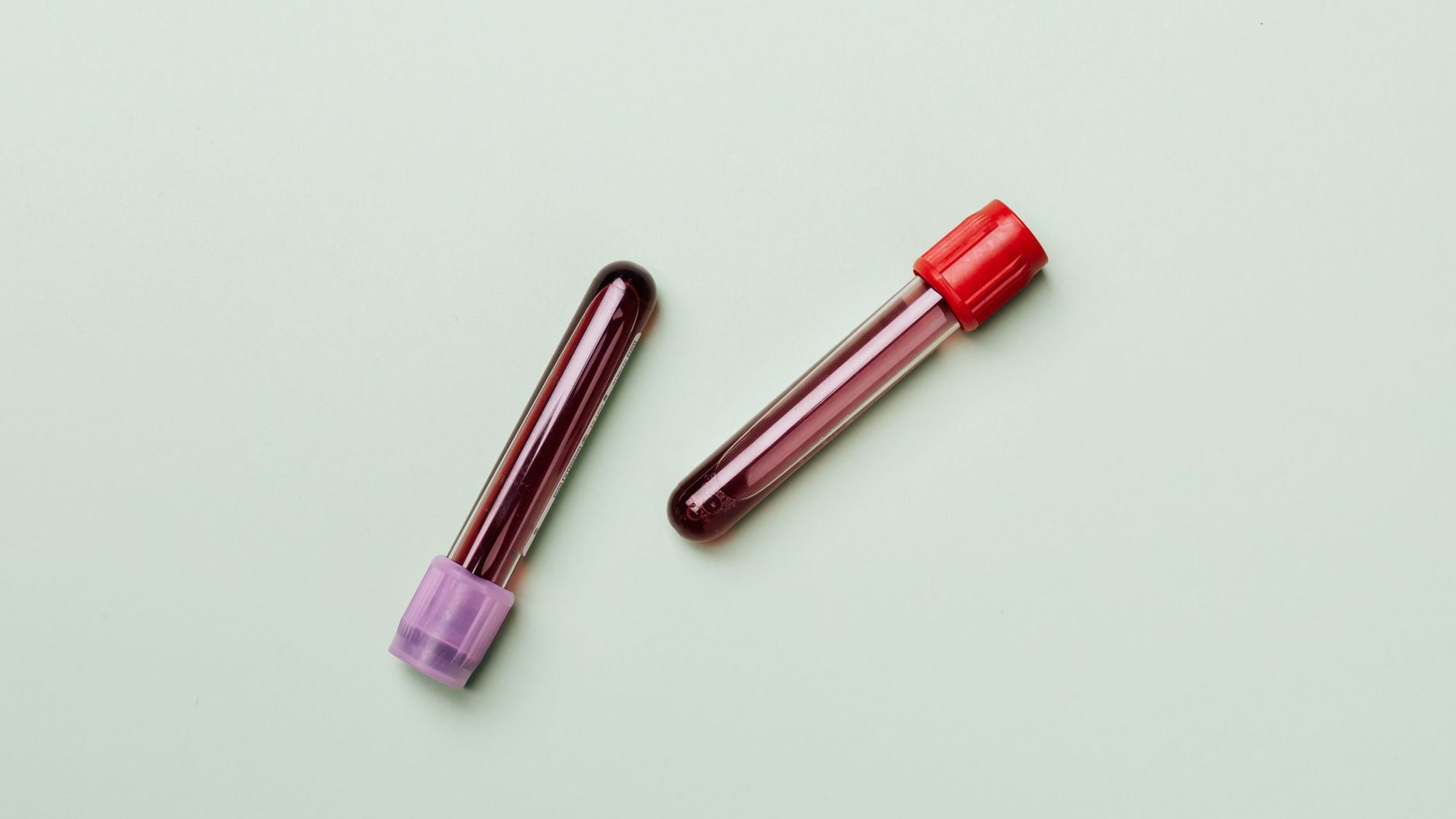
Ferritin: Why this marker shows more than iron deficiency
Ferritin is considered an iron storage marker — and is often not included in standard blood panels. Yet it has a dual character: as an inflammation marker it rises even when iron stores are simultaneously depleted.
What ferritin is and how it works in the body
Ferritin is a protein that stores iron in cells and protects against oxidative damage. It is the body's most important iron store — primarily in the liver, spleen and bone marrow. A small proportion of ferritin enters the blood plasma, where it can be measured. This serum ferritin value is considered the most reliable indirect marker for the total amount of iron stored in the body.
Ferritin is only measured in a standard blood panel when explicitly requested. It is not automatically included in a basic or comprehensive blood count. This means iron deficiency can go undetected for a long time — namely when haemoglobin is still normal but ferritin has already fallen below the critical level.
Iron deficiency without anaemia: the commonly overlooked condition
Iron deficiency anaemia — a low red blood cell count caused by iron deficiency — is the late stage of a process that first depletes iron stores before impairing haemoglobin production. A ferritin level below 30 µg/l indicates depleted iron stores, even when haemoglobin is still within the normal range. In practice, this is referred to as iron deficiency without anaemia.
This condition is widespread — particularly in women with heavy periods, in athletes, in people with a low-meat diet, and in older adults. Typical symptoms include tiredness, exhaustion, difficulty concentrating and sensitivity to cold. Because haemoglobin appears normal, the cause often goes unrecognised and symptoms remain unexplained for a long time.
The dual character: ferritin as an inflammation marker
Ferritin is not a neutral storage protein. It also belongs to the group of so-called acute-phase proteins: in acute or chronic inflammatory processes, ferritin rises sharply as part of the immune response — regardless of the actual iron content. This means: an elevated ferritin level does not automatically tell you that you have too much iron.
Someone with a chronic condition such as rheumatism, a fatty liver or metabolic syndrome can have elevated ferritin and depleted iron stores at the same time. Looking at ferritin alone could lead to the mistaken conclusion that iron supply is adequate. Ferritin should therefore always be interpreted together with other iron markers — serum iron, transferrin and transferrin saturation provide a more complete picture.
Elevated ferritin: when should you be cautious?
Persistently markedly elevated ferritin (above 300 µg/l in men, above 200 µg/l in women) can point to various causes: chronic inflammation, liver disease, metabolic syndrome, alcohol misuse, or more rarely a hereditary iron storage disorder (hereditary haemochromatosis). The latter is a genetically determined excessive intestinal iron absorption that can lead to organ damage.
Hereditary haemochromatosis is one of the most common genetic conditions in northern European populations and often goes undetected for decades because ferritin is not included in the standard blood panel. A simple genetic test (HFE variants C282Y and H63D) can reveal genetic predisposition. Anyone with elevated ferritin and no obvious inflammatory cause should have this possibility investigated.
Which ferritin levels make sense — beyond the reference range
The lower limit of the reference range at most laboratories is 12 to 15 µg/l — a level at which iron stores are nearly depleted. Functionally more favourable ranges are, in expert opinion, above 50 µg/l for women and above 70 µg/l for men. These values are not officially standardised, but are widely used reference points in preventive medicine.
Anyone having ferritin tested should also have haemoglobin measured, and if possible transferrin saturation as well. Elevated ferritin alone is not sufficient to diagnose iron overload — transferrin saturation is the more reliable marker for that.
Documenting iron status over time with the YUTHI app
In the YUTHI app you can log ferritin, haemoglobin and transferrin saturation after each blood test. If you are changing your diet or taking iron supplements, you can track over time whether your values are improving — without having to wait for a new doctor's appointment.
That was the snapshot. The app turns it into daily support.
Measure every day instead of calculating once: Vito or Vita puts your numbers in context, builds you a weekly plan and speaks up when something stands out.
Launching at the end of 2026 — iPhone first, Android to follow. Let me know when it’s out ↓
Sources
- Camaschella C. Iron-deficiency anemia. New England Journal of Medicine, 2015;372(19):1832–1843.
- Weiss G, Ganz T, Goodnough LT. Anemia of inflammation. Blood, 2019;133(1):40–50.
- Gkamprela E et al. Iron deficiency anaemia in inflammatory bowel disease. Annals of Gastroenterology, 2015;28(1):8–15.
- Nordenberg D et al. The effect of cigarette smoking on hemoglobin levels and anemia screening. JAMA, 1990;264(12):1556–1559.