
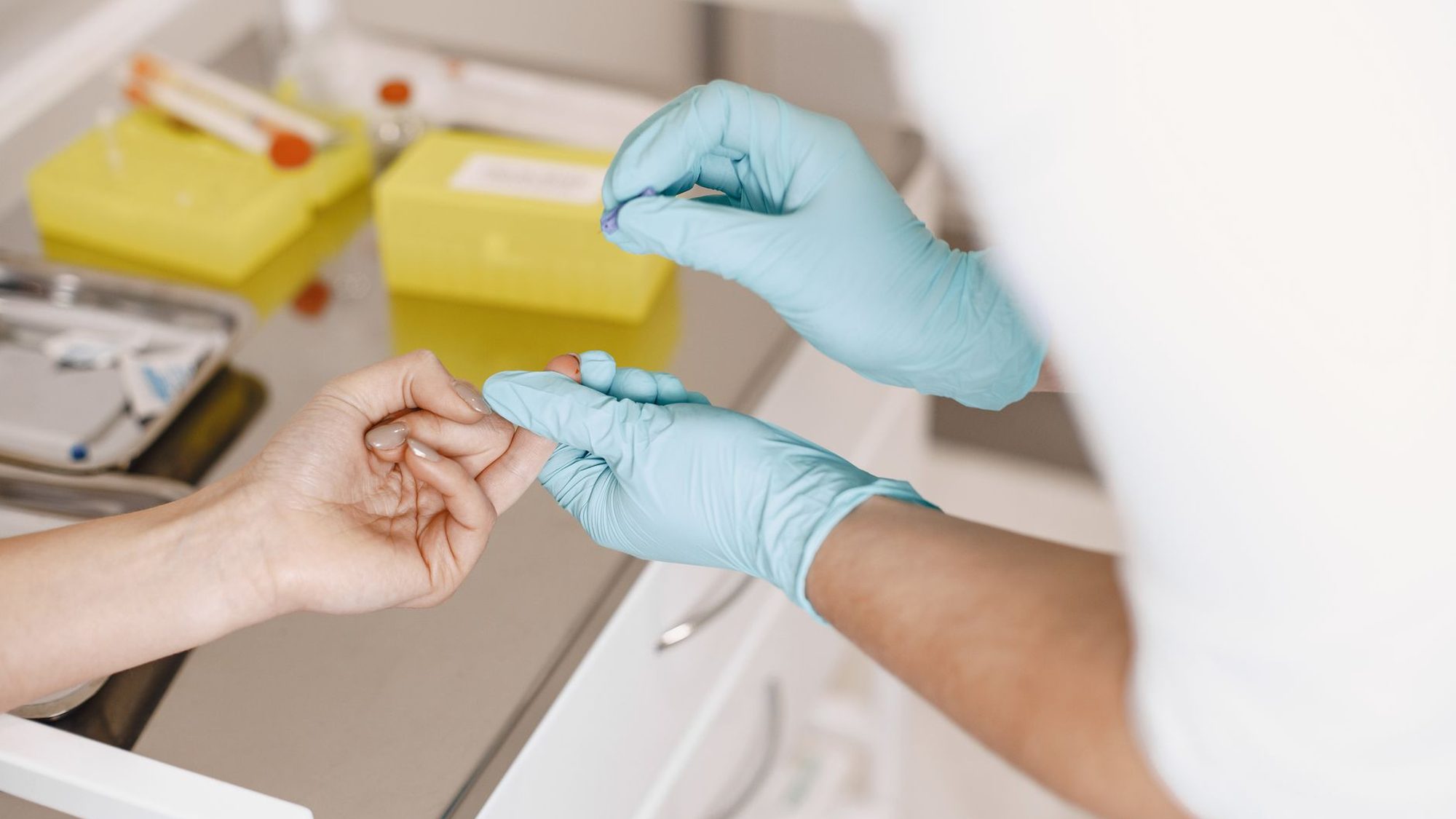
Liquid biopsy: what the new generation of early cancer detection tests can do
A blood test that screens for dozens of cancer types simultaneously — that is the promise of the new generation of MCED tests (Multi-Cancer Early Detection). What the evidence shows, where the limits lie, and what you can realistically expect from this approach.
What Liquid Biopsy means
Classic biopsies take tissue samples from a suspicious tumour. Liquid biopsy, by contrast, analyses blood or other body fluids for traces left by tumour cells. The basic principle: cancer cells release DNA fragments into the blood more extensively than healthy cells do. This so-called cell-free DNA (cfDNA) contains measurable molecular signatures that originate from cancerous tissue.
Liquid biopsy is not new — it has been used for years in therapy monitoring for known cancers to track tumour changes without taking another tissue sample. What is new is its use for early detection as part of so-called Multi-Cancer Early Detection (MCED) tests, which screen for several cancer types at once.
ctDNA and methylation patterns: the molecular trace in the blood
Cancer cells differ from healthy cells not only in their structure but also in their epigenome — particularly in the methylation patterns of their DNA. Methylation is a chemical marker that controls which genes are active. Cancer cells show characteristic methylation abnormalities that can also be detected in the DNA fragments found in blood.
MCED tests such as Galleri from Grail analyse exactly these methylation patterns across millions of cfDNA fragments. Using machine learning algorithms trained on thousands of blood samples from cancer and non-cancer cohorts, they detect deviations that may point to a tumour origin — and, when a positive signal is found, indicate which tissue the cancer most likely originates from.
What study data show about MCED tests
The validation study for the Galleri test, published in 2021 in the Annals of Oncology, examined more than 6,000 blood samples from a clinical cohort of known cancer cases and healthy controls. Sensitivity across all cancer stages was around 51 percent — meaning roughly one in two cancers was detected. For stage I–III diagnoses combined, the detection rate was approximately 69 percent, and considerably higher for advanced stages (III–IV).
Specificity was around 99.5 percent — meaning only about one in two hundred healthy people was incorrectly flagged as positive. That sounds good, but it has a mathematical downside: because cancer is rare in the general population, a positive result in a screening population still means that an actual cancer is present in only about 40 to 50 percent of cases. A positive result triggers further diagnostics — it is not a diagnosis.
Limitations and open questions
Several important questions remain unanswered. The most critical: does an MCED test improve survival rates? Studies show that the test detects cancer earlier than classic symptom-driven diagnosis. But early detection only leads to better survival if those cancers are treatment-responsive at earlier stages. The NHS GALLERI programme in the UK, examining tens of thousands of participants, is expected to deliver survival data by the mid-2020s.
Further limitations: the test is not equally sensitive for all cancer types. Lung carcinoma, ovarian cancer, pancreatic cancer and liver carcinoma are detected well; prostate and breast cancer less so. Conventional screening methods for common cancers — colonoscopy, mammography, cervical cancer screening — retain their independent importance. The MCED test complements them but does not replace them.
Who might benefit from an MCED test
Based on current evidence, those most likely to benefit are people aged 50 and over with moderate to elevated cancer risk whose conventional screening results are unremarkable. For younger people without risk factors, the predictive value of a positive result is low because prevalence is so low. People with a family history of cancer or known risk genes such as BRCA1/2 should prioritise speaking with their doctor about specialised monitoring strategies.
The psychological impact of a positive MCED finding should not be underestimated. A signal without a clear source can trigger extensive further diagnostics, anxiety and overdiagnosis. Anyone considering a test should be clear beforehand about how they would handle an ambiguous positive result — and should talk to a doctor before having the test done.
Documenting preventive check-ups with the YUTHI app
In the YUTHI app you can log all completed early-detection measures — date, result, and next recommended follow-up. This keeps you on top of which tests have been done and when the next one is due — whether it's a classic colonoscopy, a blood test or MCED screening.
That was the snapshot. The app turns it into daily support.
Measure every day instead of calculating once: Vito or Vita puts your numbers in context, builds you a weekly plan and speaks up when something stands out.
Launching at the end of 2026 — iPhone first, Android to follow. Let me know when it’s out ↓
Sources
- Klein EA et al. Clinical validation of a targeted methylation-based multi-cancer early detection test using an independent validation set. Annals of Oncology, 2021;32(9):1167–1177.
- Lennon AM et al. Feasibility of blood testing combined with PET-CT to screen for cancer and guide intervention. Science, 2020;369(6499):eabb9601.
- Hackshaw A et al. Multi-cancer early detection screening with a blood test is feasible, but evidence of benefit is still needed. New England Journal of Medicine Evidence, 2022;1(6).
- Cristiano S et al. Genome-wide cell-free DNA fragmentation in patients with cancer. Nature, 2019;570(7761):385–389.