
Urolithin A: The molecule from pomegranates and its effect on mitochondria
Urolithin A is produced when certain gut bacteria break down polyphenols from pomegranates and walnuts. In human studies it showed effects on mitochondrial health — making this molecule one of the most interesting newer longevity candidates.
What Urolithin A is and where it comes from
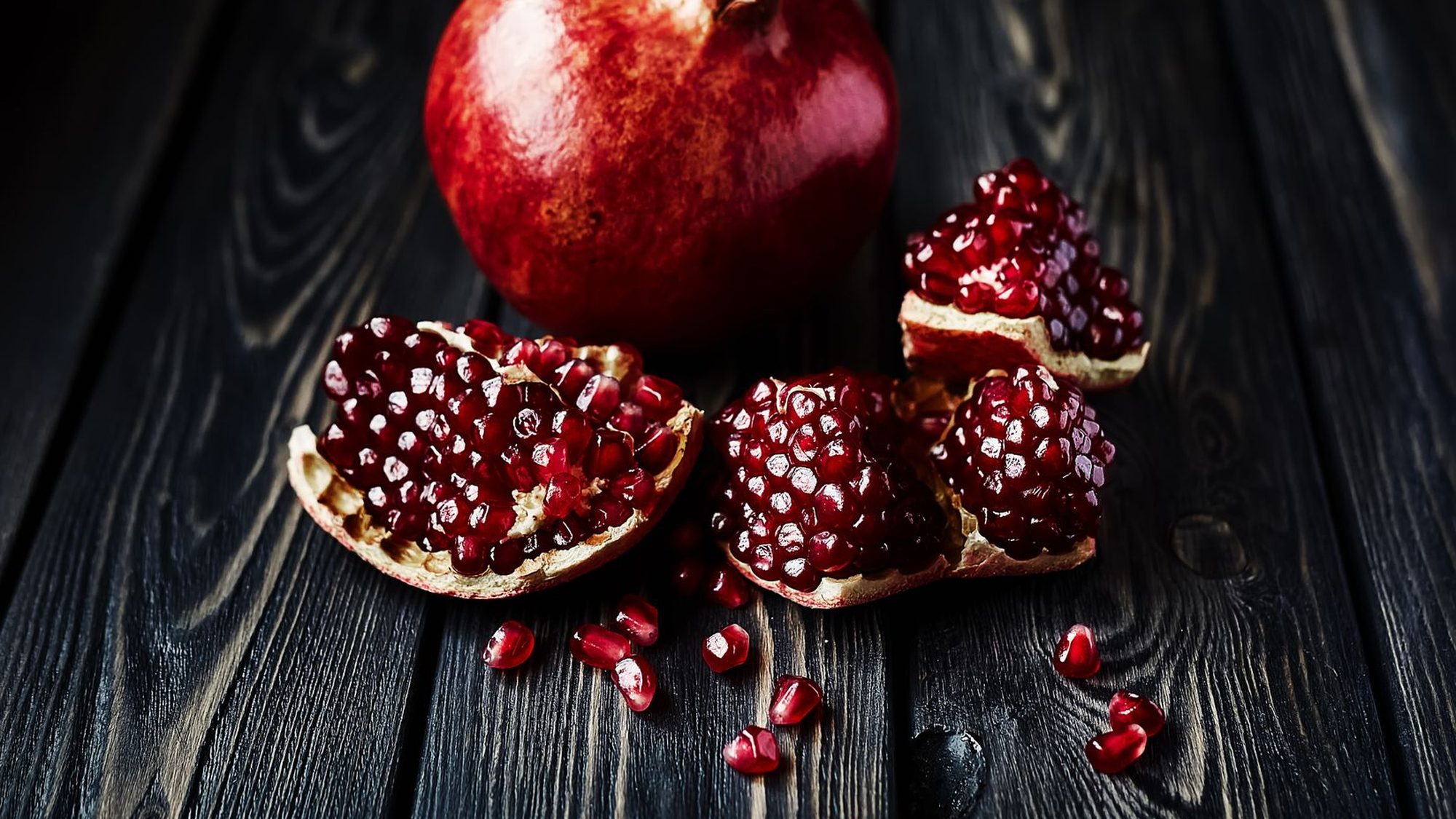
Urolithin A is not a direct dietary nutrient but a metabolite: it is produced when gut bacteria break down certain polyphenols — primarily ellagic acid from pomegranates, walnuts, raspberries and strawberries. Most people can produce Urolithin A, but to very different degrees — depending on the composition of their gut flora.
Estimates suggest that only around 40% of adults in Western countries can produce adequate amounts of Urolithin A from food. The rest either have an inefficient bacterial population or too low a polyphenol intake.
The mechanism of action: activating mitophagy
Urolithin A activates mitophagy — the selective autophagy of damaged mitochondria. Damaged mitochondria are tagged, encapsulated and broken down; their components are used to build new, functional mitochondria. This process is a quality-control mechanism that slows with age.
In animal models, Urolithin A extended lifespan in nematodes and mice and improved muscle endurance in older mice. In cell cultures it was shown to activate mitophagy markers and dampen inflammatory pathways.
What human studies show
The most important clinical study on Urolithin A to date was conducted by Johan Auwerx's group at EPFL in Lausanne and published in Nature Metabolism in 2022. In this randomised controlled trial with 88 healthy older adults over 65, Urolithin A (1000 mg daily for four months) significantly improved muscle endurance in handgrip and six-minute walk test compared to placebo.
Blood samples also showed changes in mitochondria-related genes and metabolites, supporting the activation of mitophagy. The study was well designed and showed no serious side effects. Nevertheless, it remains a single finding — further independent studies are needed.
Supplement or pomegranate?
Because not everyone can efficiently produce Urolithin A from food, Urolithin A is offered directly as a supplement — for example by the manufacturer Mitopure, which has licensed the substance from the EPFL spin-off company Amazentis. Clinically tested doses are 500 to 1000 mg per day.
Those with well-equipped gut bacteria who regularly eat polyphenol-rich foods — daily pomegranate, walnuts, berries — may produce sufficient endogenous Urolithin A. A reliable measurement of one's own production level is not available in routine clinical practice.
Urolithin A and the YUTHI app
If you take Urolithin A as a supplement or systematically incorporate pomegranate juice and walnuts into your diet, you can document this in the YUTHI app as an intervention. Combine this with tracking your physical performance — for example via grip strength measurement or a regular walk test.
For older adults who want to preserve muscle mass and endurance for as long as possible, Urolithin A is one of the most interesting newer topics in longevity research — with honest evidence from one human study. No more, but no less either.
That was the snapshot. The app turns it into daily support.
Measure every day instead of calculating once: Vito or Vita puts your numbers in context, builds you a weekly plan and speaks up when something stands out.
Launching at the end of 2026 — iPhone first, Android to follow. Let me know when it’s out ↓
Sources
- Andreux PA et al. The mitophagy activator urolithin A is safe and induces a molecular signature of improved mitochondrial and cellular health in humans. Nature Metabolism, 1:595–603, 2019.
- Singh A et al. Orally administered urolithin A is safe and modulates skeletal muscle and mitochondrial biomarkers in older adults. GeroScience, 44(3):1439–1468, 2022.
- Ryu D et al. Urolithin A induces mitophagy and prolongs lifespan in C. elegans and increases muscle function in rodents. Nature Medicine, 22(8):879–888, 2016.