
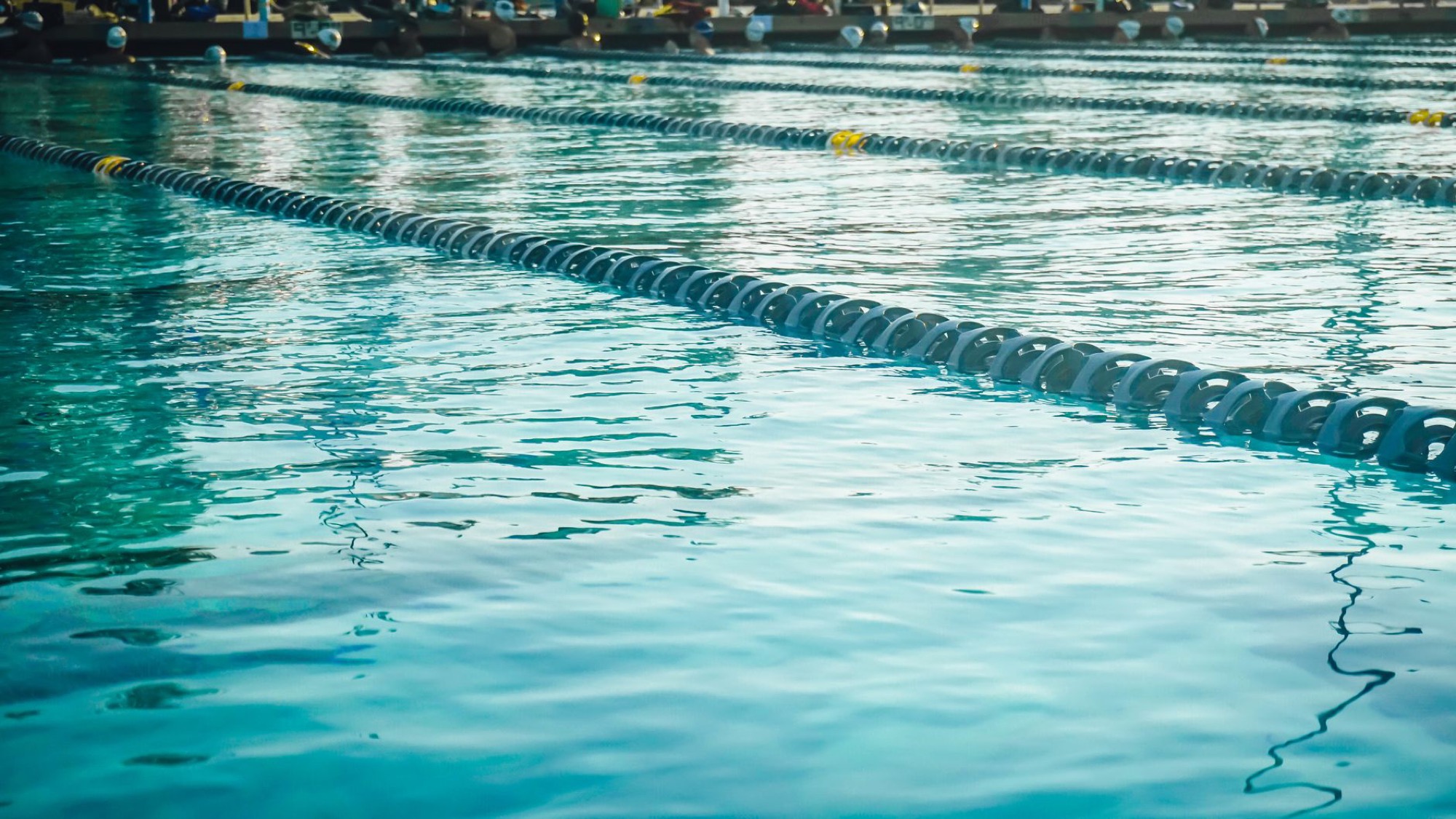
Swimming: the underrated endurance sport
In the water you bear only about one tenth of your body weight. This makes swimming an endurance workout for people who find running too hard — with one feature almost nobody knows: your heart rate runs systematically lower here.
What water does to the body
When submerged to the neck, buoyancy carries around ninety percent of body weight. For the knees, hips and spine this means: full movement with minimal load. For people with osteoarthritis, excess weight or back problems, this is often the only way to sustain endurance training over a longer period.
At the same time, water pressure acts on the chest and the veins. More blood flows back to the heart, stroke volume rises, and breathing must work against the pressure — a workout for the respiratory muscles that simply doesn't happen on land. Tanaka describes these relationships in detail in his 2009 review.
Why your heart rate in the water is misleading
At the same effort level, heart rate during swimming is about ten to twenty beats per minute lower than during running. There are three reasons for this: the horizontal body position, which takes some work off the heart; water pressure, which supports venous return; and the so-called dive reflex — cold water on the face reflexively lowers heart rate.
This has a practical consequence: anyone who uses their running training zones in the water is training too hard. The thresholds shift downward. For swimming, either use your own dedicated zones or go by breathing — in base endurance you should be able to speak full sentences when you stop at the pool wall.
What the research shows
In 2017, Oja and colleagues analysed data from over eighty thousand British adults and compared different types of sport. Swimming was among the activities associated with lower all-cause mortality — similar to racquet sports and aerobics. This is an observational study: it shows an association, not a cause.
The data on individual measurements are more robust. In controlled studies, regular swimming lowers blood pressure and improves vascular function, similarly to other forms of endurance exercise. Alkatan and colleagues studied people with knee osteoarthritis in 2016: after twelve weeks of swimming, pain and joint stiffness were measurably reduced — to the same degree as cycling in the comparison group.
What swimming cannot do
It does little for your bones. Bones become stronger through impact and tensile forces — both are largely absent in water. Studies on competitive swimmers sometimes even find lower bone density values than in runners or those who strength train. Anyone wanting to protect their bones needs strength training or load-bearing exercise in addition.
Swimming is also no guaranteed weight-loss tool. Calorie burn is decent, but the cool water and subsequent hunger cancel out part of that for many people. And technique matters more than in any other endurance sport. Swimming without good technique burns a lot of energy for little distance — a few hours of lessons are the best investment you can make in this sport.
How to get started
For getting started, two sessions per week of twenty to thirty minutes is enough. Break the distance into segments: four times fifty metres with thirty seconds' rest is more suitable for beginners than two hundred metres straight. Breaststroke is fine — with your head in the water rather than permanently extended, otherwise the cervical spine suffers.
Swimming goggles make more difference than you might think: they allow the correct head position and take the shock out of having your face in the water. For people with heart conditions, epilepsy or dizziness, swimming should be discussed with a doctor first — and swimming alone is not advisable in those cases. This content does not replace medical advice.
How the YUTHI app helps you
You log swimming sessions with duration, distance and perceived effort, and the app counts them toward your activity minutes — on equal footing with running or cycling. That is more than bookkeeping: if you switch to swimming because your joints can no longer keep up, you can see that your weekly volume stays stable.
Vito and Vita are aware of the heart rate peculiarity in water and do not draw the wrong conclusions from it — a low pulse during swimming is not a sign of training too easy for them. And they point out the gap that swimming leaves open: if you only swim, they remind you to do two strength sessions per week for your bones.
That was the snapshot. The app turns it into daily support.
Measure every day instead of calculating once: Vito or Vita puts your numbers in context, builds you a weekly plan and speaks up when something stands out.
Launching at the end of 2026 — iPhone first, Android to follow. Let me know when it’s out ↓
Sources
- Tanaka H. Swimming exercise: impact of aquatic exercise on cardiovascular health. Sports Med. 2009;39(5):377–387.
- Oja P, Kelly P, Pedisic Z, et al. Associations of specific types of sports and exercise with all-cause and cardiovascular-disease mortality: a cohort study of 80 306 British adults. Br J Sports Med. 2017;51(10):812–817.
- Alkatan M, Baker JR, Machin DR, et al. Improved Function and Reduced Pain after Swimming and Cycling Training in Patients with Osteoarthritis. J Rheumatol. 2016;43(3):666–672.
- Lazar JM, Khanna N, Chesler R, Salciccioli L. Swimming and the heart. Int J Cardiol. 2013;168(1):19–26.