YUTHI
All areas · Body

Exercise and movement

Your weekly goal based on the WHO, a light for recovery and weights that fit your goal — not someone else's.

Soon on theApp Store Soon onGoogle Play

Try it free now · Not ready yet? Let me know.

The Sport and movement area, Analysis tab: 26 sessions in 4 weeks, 295 of 150 minutes in 7 days, training mix and steps
Weekly summary from 26 Oct to 1 Nov: 6 sessions, 295 of 150 minutes, including zone 2 run, strength training, running and swimming
What YUTHI keeps an eye on for you

Move enough, recover in time — both count.

Three things the app works out for you every day. The sources are listed at the bottom of the page.

Your WHO weekly goal

The WHO recommends 150 to 300 minutes of activity per week and strength training on at least two days.1 YUTHI counts every session — from running to swimming.

Example: 6 sessions, 295 of 150 minutes. The dashed line shows about 22 minutes a day — how the weekly goal spreads out.

The recovery light

The app checks three signals: sleep under 7 hours, heart rate variability (HRV) clearly below your average and a resting pulse clearly above it. That becomes a recommendation for today.
How many signals stand out?

  • Nonego hard today
  • Onetake it easy
  • Two or morerest day

“Clearly” means more than one standard deviation away from your own average, and for resting pulse also at least 3 beats. You need measurements on at least 7 days — before that, the app shows no light.

Muscles need rest

The muscle guide shows for each muscle group how long it needs to rest after intense training — and why.

Rest after intense training

  • Thighs, back~72 h
  • Chest, glutes, shoulders, arms~48 h
  • Abs, calves, forearms~24 h

Large muscles take longer, small and enduring ones recover faster. These are guidelines, not rules.

What else you can do with it

Train for your goal — not someone else's.

Progression that fits your goal

Not everyone wants to lift heavier and heavier. The app only suggests more weight when it fits your goal. The rep ranges follow the American College of Sports Medicine.6

  • Get stronger3–6 reps+2.5 / +5 kg
  • Build muscle8–12, more reps firstthen weight
  • Stay healthy and fit10–15 repskeep the weight

+2.5 kg applies to the upper body, +5 kg to the lower body — as soon as you reach the top of the range in every set. You can freeze the suggestion per exercise with “Hold”.

Sometimes less

If sets repeatedly don't work out, the app suggests a deload instead of pushing you further. If just one set fails once, the weight stays the same.

  1. missed twice
  2. about 10 % less
  3. build back up

Twice means: one set below the lower limit in two sessions in a row — or two sets in one session.

Calories per session

The app works out live how much energy a session used — more precisely with pulse, without pulse from a table value per sport.

  • With pulseKeytel formula8more precise
  • Without pulseMET × weight × hoursover 55 sports

MET is a measure of effort: 1 MET equals sitting quietly. Every sport has three levels — easy, moderate, intense.

Personal bests worth sharing

If you lift more than ever before or your estimated maximum strength rises, the app celebrates the personal best — as a card you can share.

  • Example squat80 kg × 5 reps≈ 93 kg

The one-rep maximum (1RM) is estimated with the Epley formula: weight × (1 + reps ÷ 30). Above 12 reps it becomes unreliable, so the app doesn't calculate it.

Your training

From plan to rest — all in one place.

Plan your week, start the session, tick off your sets. The app remembers what you managed and suggests the right weight next time.

  1. 1Planweekly plan or goal with a date
  2. 2Startkeeps running in the background
  3. 3Tick offsets, weight, reps
  4. 4Progressto fit your goal
  5. 5Recoverlight and muscle rest

And the next session starts with the right weight.

Muscle guide from the front: shoulders, chest and biceps about 48 hours of rest, abs, forearms and calves about 24 hours, legs about 72 hours
Muscle guide, front
Muscle guide from the back: back about 72 hours of rest, triceps and glutes about 48 hours
Muscle guide, back

Swap an exercise

Machine taken or training at home? The app suggests an exercise that trains the same thing.

  • same muscle group
  • same type of equipment first
  • filter: machine, home, bodyweight
  • a gentler variation if something hurts

A goal with a date

Say what you want to achieve by when. That becomes a weekly plan with stages.

  1. goal and date
  2. weekly plan
  3. stages

The AI only works here when you press the button — never in the background.

Rest timer

A timer runs between sets. One tap adds 30 seconds if the set was tough.

  • 30 s
  • 45 s
  • 60 s
  • 90 s
  • 120 s
  • 180 s

If you forget to finish a session, the app lets you know.

With Apple Health

Your session goes back to Apple Health, and minutes aren't counted twice. The app takes steps and VO₂max from your watch. In an analysis of 33 studies, each 1 MET of extra fitness was linked to 13 % lower mortality.9

  1. session
  2. Apple Health
  3. steps and VO₂max

These are observational studies: a link is not a cause.

Training in pictures

105 exercises, each with its own photo.

So you don't have to guess how an exercise works: the app shows you — and, if you like, checks whether your technique is right.

The exercise library

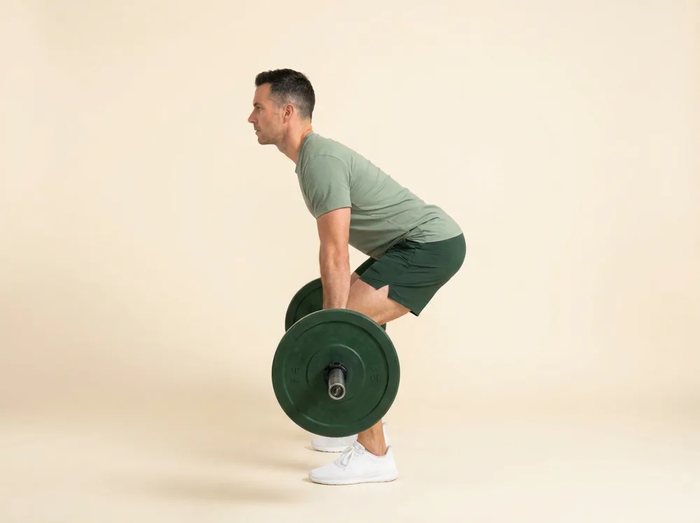
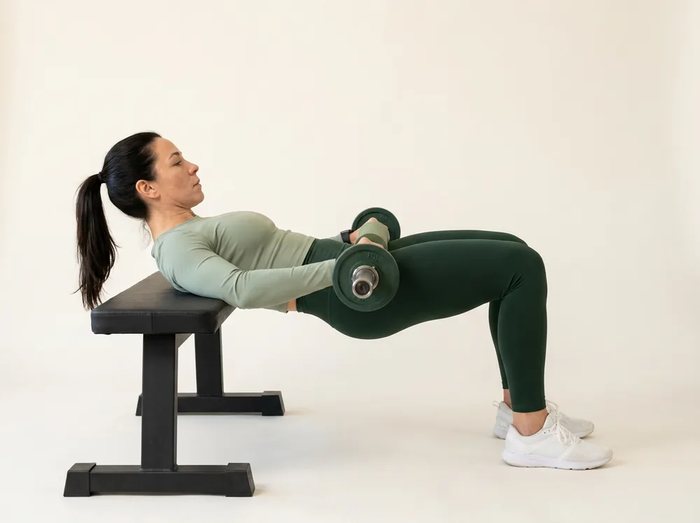
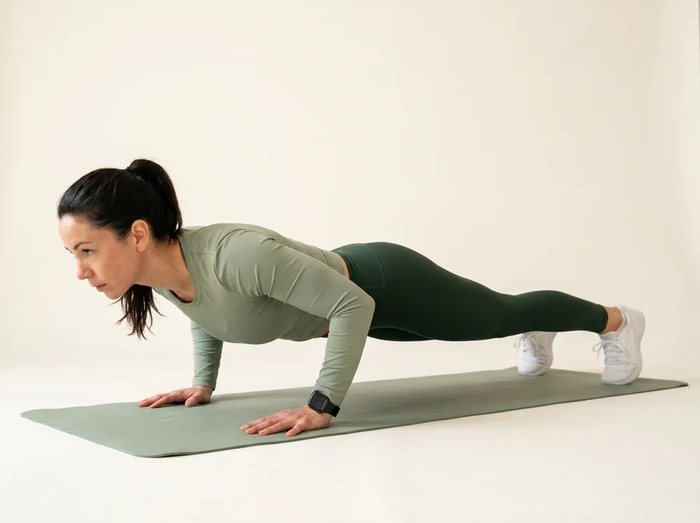
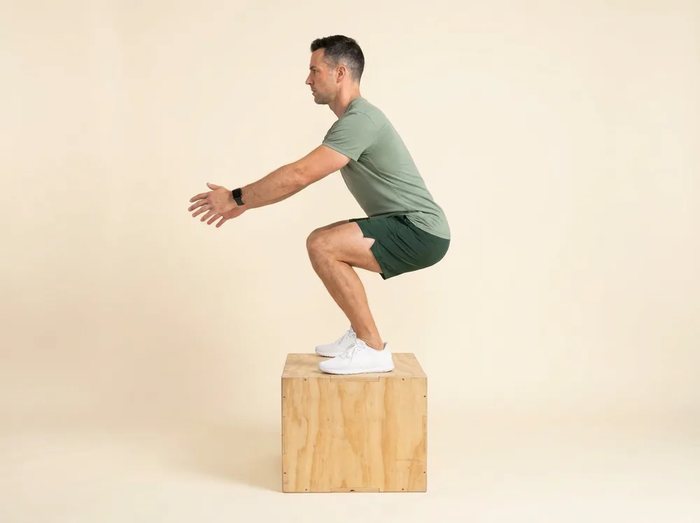
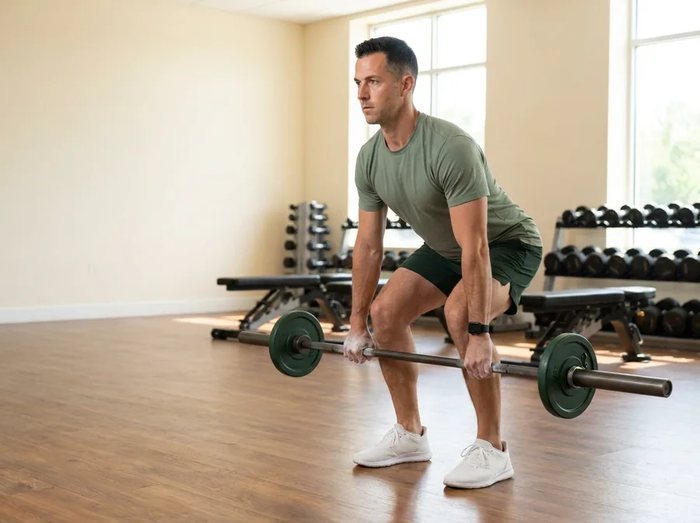
Twelve of the 105 exercise photos in the app — from the deadlift to the bird dog.

Deadlift
Bench press
Lunges
Hip thrust
Barbell row
Push-ups
Plank
Dumbbell row
Box jumps
Burpees
Battle ropes
Bird dog

How to log it — in seconds

Cardio, strength or yoga: a few taps and done. Or simply tell your coach — it logs it for you.

App screen “Log a session” with running and today selected
Log cardio. Pick the sport, day and duration — the app calculates calories by sport and intensity.
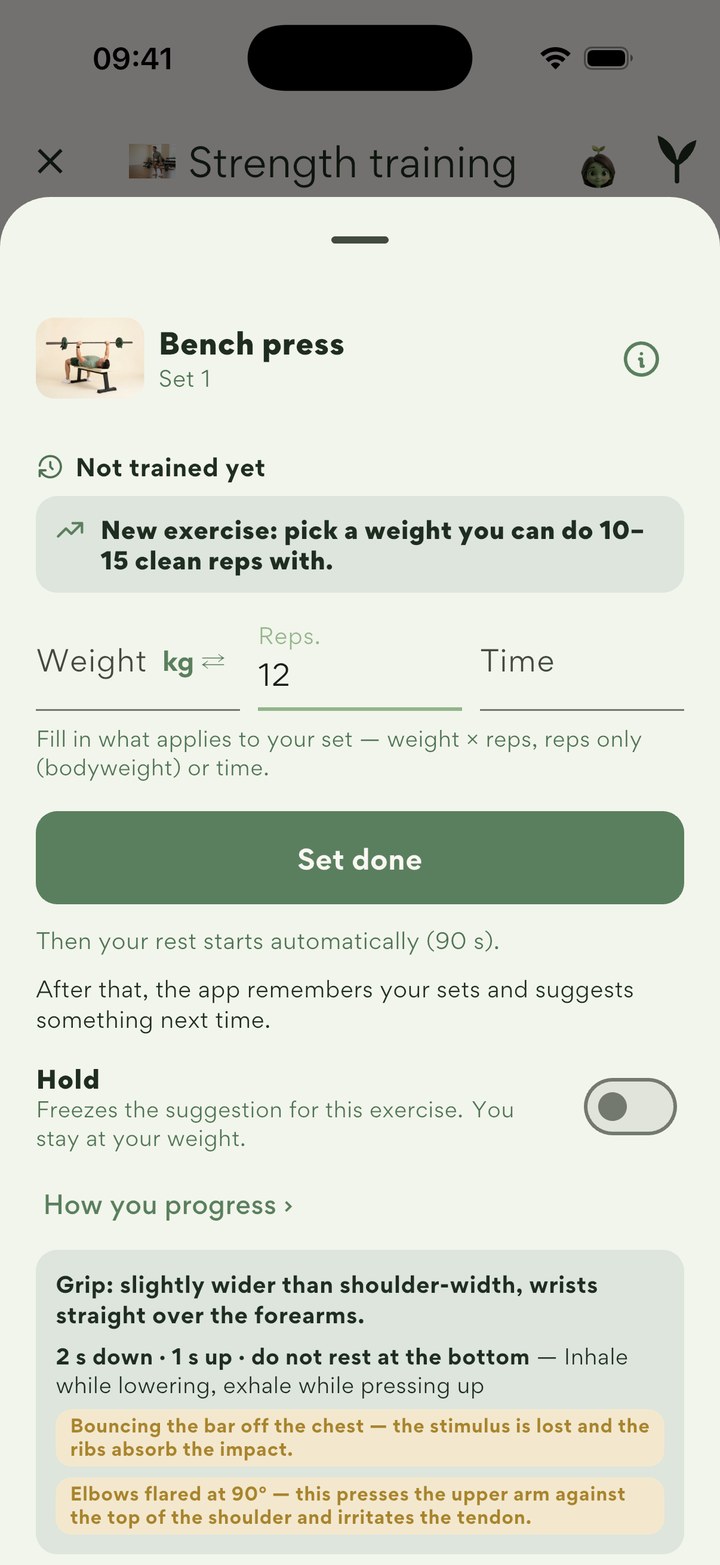
App screen “Bench press, set 1” with fields for weight and reps
Strength: set by set. Enter weight and reps, tap “Set done” — the rest timer starts on its own, and next time the app suggests what to do.
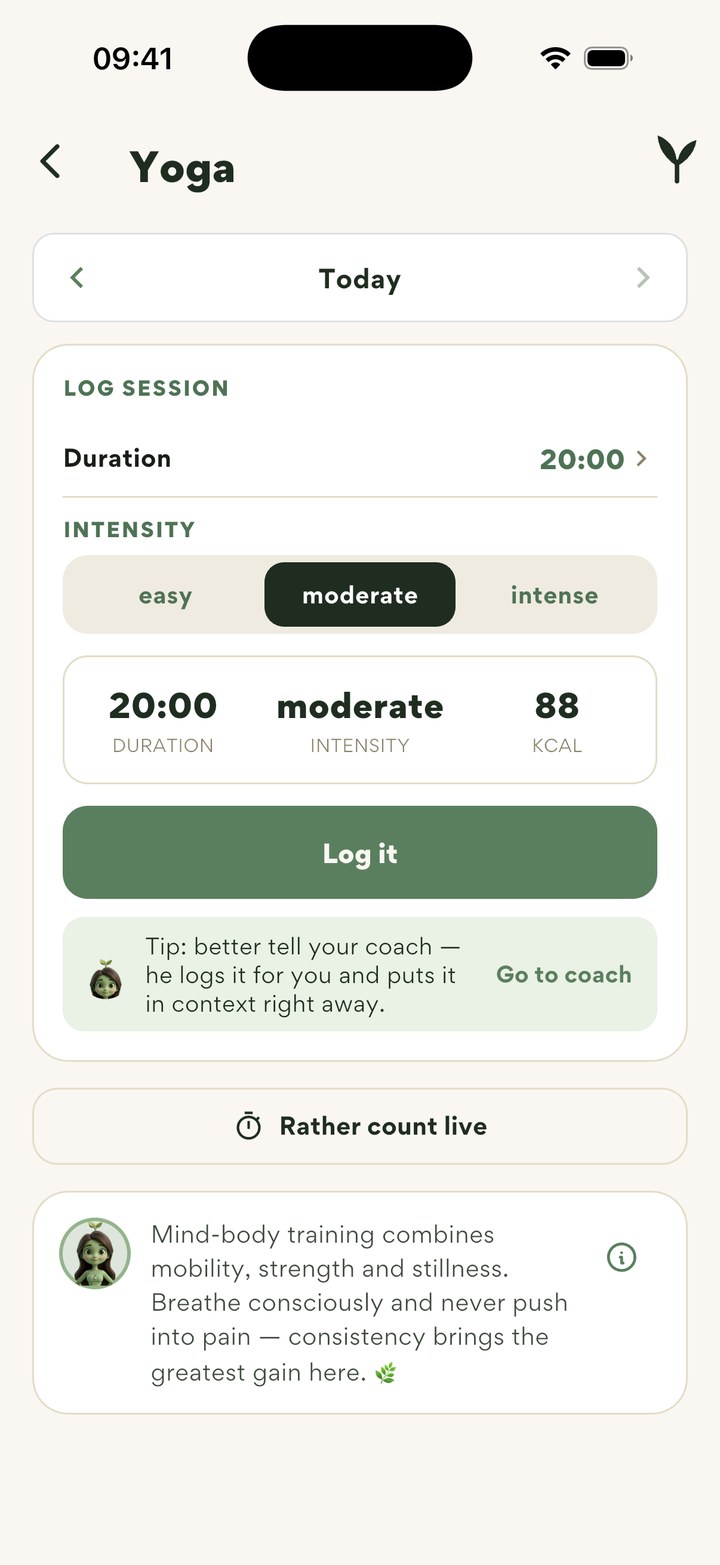
App screen “Yoga” with 20 minutes, moderate and a log button
Yoga in one step. Choose duration and intensity, log it. Or count live instead.
Technique check

Is your technique right? The camera watches along.

Place your iPhone to the side and do one of seven exercises: squat, push-up, deadlift, lunge, forearm plank, glute bridge or bent-over row. The app recognises your posture and shows you checkpoints — for the forearm plank it measures how straight you hold for 30 seconds. The camera image is analysed only on your phone, never stored and never leaves your phone.

  1. Place iPhone to the side
  2. Do the exercise
  3. Review checkpoints

What makes clean form follows the technique chapters of the NSCA and ACSM. For now on iPhone only.

Your sport, your picture

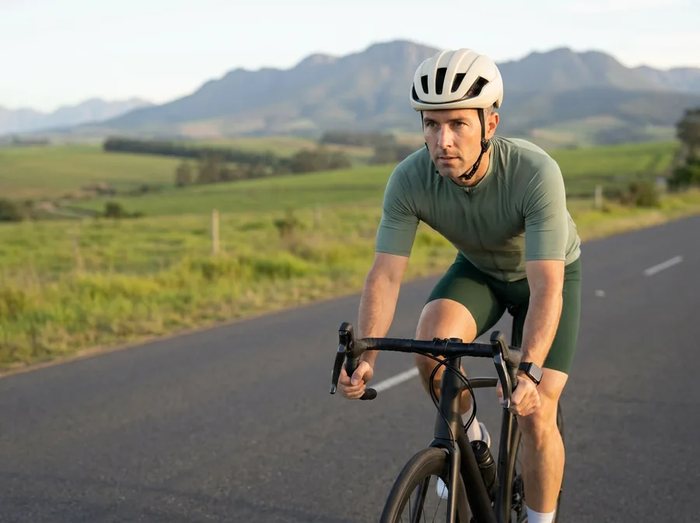
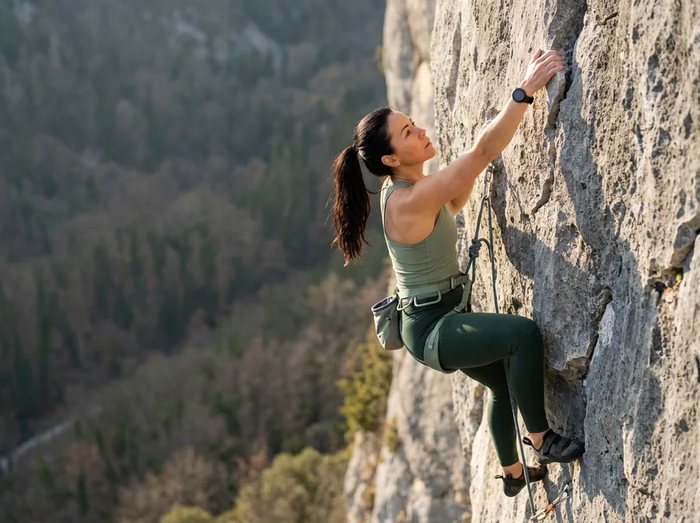
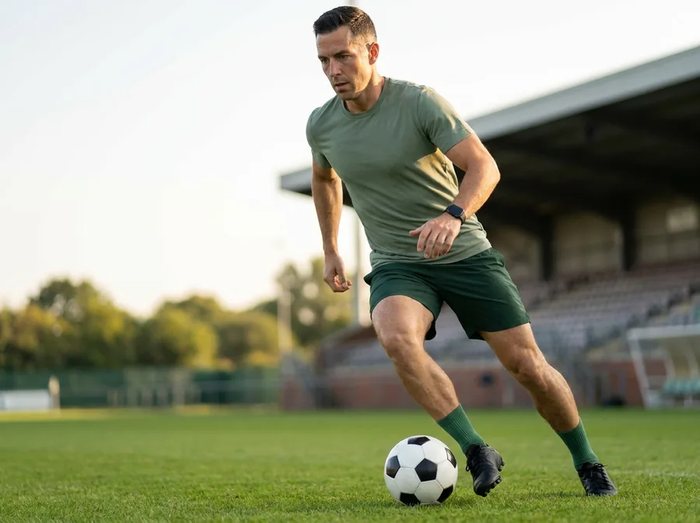
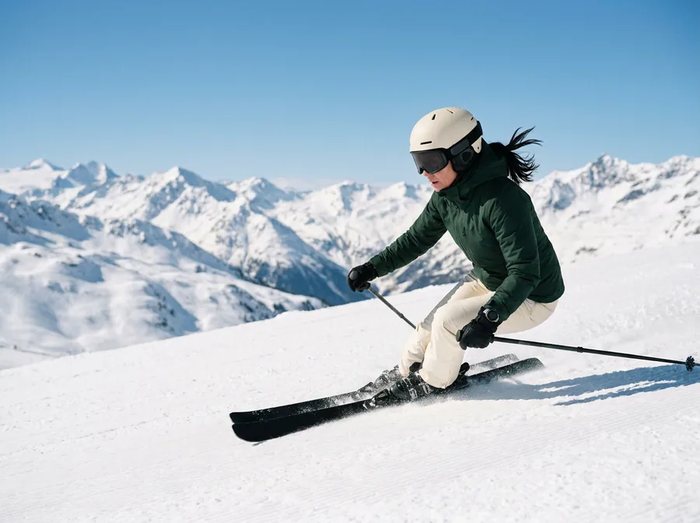
Running, climbing or dancing: every session counts towards your weekly goal, and the app calculates calories per sport.

Running
Cycling
Swimming
Strength training
Yoga
Hiking
Climbing
Tennis
Football
Boxing
Dancing
Skiing

A plan for every place

Gym, home, hotel or outdoors: tell the app where you train, what's there and how much time you have — and your plan is built from that. Already have a plan, say from your gym? Take a photo of it, and with one tap the coach saves it in “My plans”.

Gym
At home
Hotel
Outdoors
  1. Where do you train?
  2. What's there?
  3. How much time do you have?

There are eight options to choose from — from “nothing” to dumbbells and bands to machines.

Your areas talk to each other

Sport is connected to more than you think.

The app already calculates these connections today. A connection is not a cause — but it shows you where to look.

What does your body good

150 to 300 minutes a week, plus strength

The WHO recommends 150 to 300 minutes of moderate-intensity activity a week for adults (or 75 to 150 minutes of vigorous activity) and regular muscle-strengthening. Some activity is better than none, and more is better for health.1

Steps count

A review of 15 studies with 47,471 adults: the risk of death fell with more steps, up to about 8,000 to 10,000 steps a day for those under 60 and up to about 6,000 to 8,000 from age 60. Fewer steps are still better than none.2

Break up long sitting

Light walking in between kept blood sugar lower after meals in a review of 7 studies. The WHO advises sitting less at every age.13

What you should rather skip

Very hard training right before bed

Evening exercise does not harm sleep in studies. Only very intense training that ends less than an hour before bedtime can affect falling asleep and sleep duration.4

Sitting for hours on end

The WHO recommends reducing sedentary behaviour at every age. The studies do not yet allow a fixed limit.1

More in the magazine

A new article every Friday.

All articles in the magazine
Sources
  1. Bull FC et al.: World Health Organization 2020 guidelines on physical activity and sedentary behaviour. Br J Sports Med 2020
  2. Paluch AE et al.: Daily steps and all-cause mortality: a meta-analysis of 15 international cohorts. Lancet Public Health 2022
  3. Buffey AJ et al.: The Acute Effects of Interrupting Prolonged Sitting Time in Adults with Standing and Light-Intensity Walking on Biomarkers of Cardiometabolic Health in Adults: A Systematic Review and Meta-analysis. Sports Med 2022
  4. Stutz J et al.: Effects of Evening Exercise on Sleep in Healthy Participants: A Systematic Review and Meta-Analysis. Sports Med 2019
  5. Hill EE et al.: Exercise and circulating cortisol levels: the intensity threshold effect. J Endocrinol Invest 2008
  6. American College of Sports Medicine: Position stand. Progression models in resistance training for healthy adults. Med Sci Sports Exerc 2009;41(3):687–708
  7. Momma H et al.: Muscle-strengthening activities are associated with lower risk and mortality in major non-communicable diseases: a systematic review and meta-analysis of cohort studies. Br J Sports Med 2022;56(13):755–763
  8. Keytel LR et al.: Prediction of energy expenditure from heart rate monitoring during submaximal exercise. J Sports Sci 2005;23(3):289–297
  9. Kodama S et al.: Cardiorespiratory fitness as a quantitative predictor of all-cause mortality and cardiovascular events in healthy men and women: a meta-analysis. JAMA 2009;301(19):2024–2035
  10. McNulty KL et al.: The effects of menstrual cycle phase on exercise performance in eumenorrheic women: a systematic review and meta-analysis. Sports Med 2020;50(10):1813–1827

Every statement comes with its source; the figures are taken from the linked studies and opinions (checked on 1 November 2026). This is context from the research, not a diagnosis and no substitute for medical advice.

Try it free now

Get YUTHI from the App Store — iPhone first, from November 2026.

Soon on theApp Store Soon onGoogle Play

Not ready yet? Let me know.